What Happened
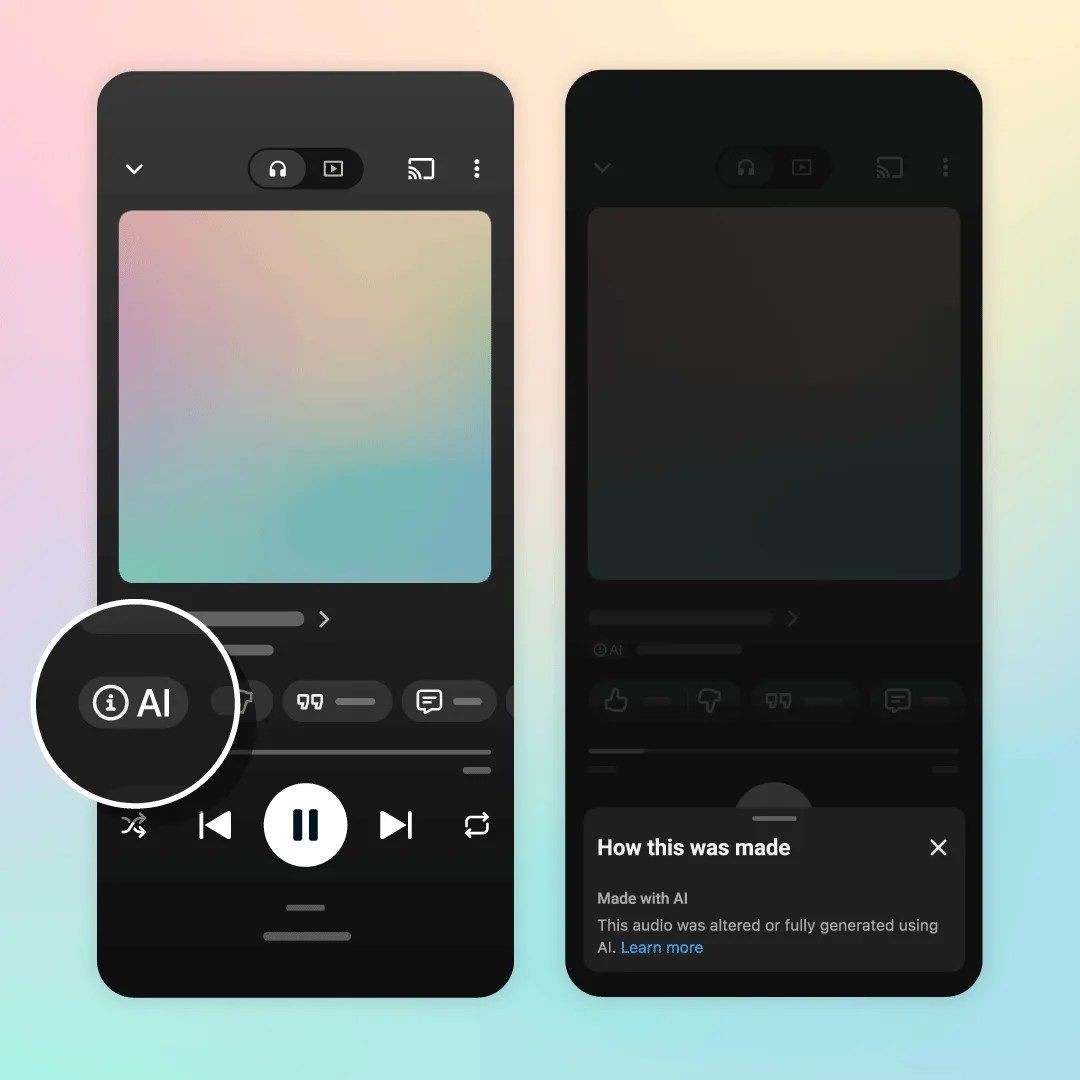
YouTube is introducing a new on-screen label that flags songs created with generative artificial intelligence. The label, which reads “Made with AI,” will appear on tracks that have been either substantially altered or completely generated by AI tools. It is the first major music-streaming service to adopt a labeling system that mirrors the one already used for AI‑tagged videos on the platform.
The Key Details
- The label is rolling out starting today in the YouTube Music app, with a planned expansion to the main YouTube app at a later date.
- When a listener views a song that meets the criteria, the “Made with AI” tag appears directly on the player page. Tapping the tag opens a menu that provides additional information about the track’s AI involvement.
- YouTube is working with its music partners and employing its own detection tools to identify AI‑generated content. The approach follows the same principles used for labeling AI‑related videos.
- The company’s guidance for music partners explicitly requires disclosure when a generative model is used to create the composition and vocals. If a partner fails to disclose, YouTube may rely on “other signals” to determine whether a song is AI‑generated.
- Other platforms are responding with similar measures:
- Spotify launched a voluntary AI label earlier this year and said it would not recommend songs from “AI personas.” - Apple Music is reportedly preparing an AI tag. - Deezer added a switch that lets users filter out AI tracks. - Bandcamp banned AI music outright.
Why It Matters
The move reflects a broader industry effort to bring transparency to AI‑generated music. By surfacing a clear label, YouTube aims to help listeners distinguish between human‑created songs and those shaped or wholly produced by generative models. This clarity can influence how audiences consume music, how creators market their work, and how platforms enforce their content policies.
For rights holders and distributors, the label introduces a new disclosure requirement. Failure to flag AI involvement could lead to the platform applying its own detection mechanisms, which may affect how a track is promoted or categorized.
The existence of parallel initiatives at Spotify, Apple Music, Deezer, and Bandcamp shows that the issue is being addressed across the streaming ecosystem, each with its own approach—from voluntary labels to outright bans.
What It Means for Readers
- Everyday listeners will see a “Made with AI” badge on songs where AI played a significant role, making it easier to identify AI‑generated tracks.
- Music creators and producers must now consider whether their use of generative models needs to be disclosed to avoid potential platform intervention.
- Developers and AI tool makers may need to align their products with platform labeling requirements if their output is distributed through YouTube Music.
- General consumers can expect similar labeling features to appear on other services, as the industry moves toward standardized transparency.
What Happens Next
YouTube has not provided a specific timeline for the expansion of the label to the main YouTube app. The company has indicated that it will continue to refine its detection methods and work closely with music partners. Further details about enforcement and potential penalties for non‑compliance have not been disclosed.
VANTIX Takeaway
The most important development is that YouTube is taking concrete steps to label AI‑generated music, giving listeners a clear signal when a track has been altered or created by generative AI. This marks a significant move toward transparency in the music streaming landscape.


