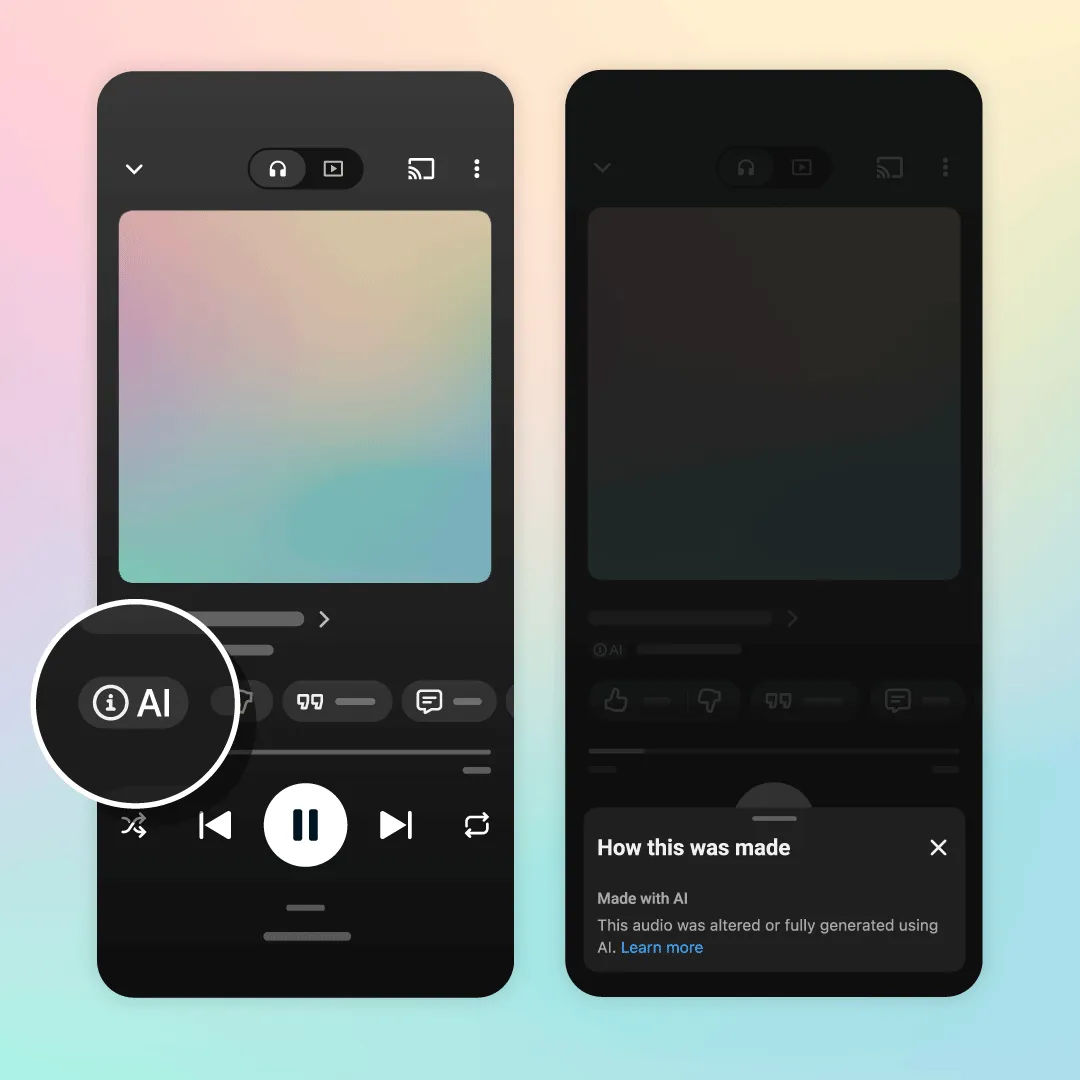
New Labeling System Launched by YouTube Music to Signal AI-Generated Content
YouTube Music has unveiled a comprehensive labeling framework designed to enhance transparency around music created with the assistance of generative artificial intelligence. The initiative marks a significant step toward helping listeners understand the origins of digital audio on streaming platforms.
The Three Designations
The new system categorizes tracks into three distinct groups:
- Fully Gen AI: Tracks that are entirely generated by artificial intelligence, with no human creative input in the core production.
- Partly Gen AI: Works that incorporate AI-generated components alongside direct artistic contributions from humans, such as live performances or manual editing.
- No Gen AI: Traditional tracks produced using conventional recording methods, including those processed with standard pitch-correction tools like Auto-Tune.
Clicking on either of these labels on a track's player page reveals detailed information about the specific role AI played in the song's creation, providing listeners with actionable insight into the songwriting and performance process.
Platform Integration
This labeling effort extends beyond YouTube Music to the main YouTube app as well, ensuring consistent visibility across the platform. By making AI involvement visible, the service aims to foster greater awareness among users about the growing prevalence of AI-generated content on streaming services.
How Partnerships Participate
YouTube has collaborated with various music partners and deployed proprietary detection tools to identify AI-generated music. Participants in the ecosystem can officially declare their work's use of generative AI through one of the three designations outlined above. This collaborative approach allows platforms to self-regulate while maintaining creative freedom for artists.
Context: Industry-Wide Response
The introduction of these labels comes amid rapid expansion of AI-generated music across all major streaming services. Similar initiatives are underway elsewhere:
- Apple Music plans to introduce "Made With AI" labels as part of its broader AI Transparency Tags program later this year.
- Spotify already features AI-related labels and operates a music spam filter to manage AI-generated content.
- Deezer reports receiving nearly 90,000 fully AI-generated tracks daily and takes a more restrictive stance by excluding AI-labeled tracks from algorithmic recommendations and editorial playlists, while also withholding royalties from suspected fraudulent streams.
- TIDAL labels entirely AI-generated recordings, offers listeners the ability to disable such tracks, and excludes them from royalty attribution.
YouTube's Approach: Disclosure Over Restriction
Unlike some competitors who impose blanket restrictions, YouTube is prioritizing disclosure over prohibition. The new labels are meant to inform listeners about AI's role in music creation without penalizing creators or limiting monetization. Importantly, AI involvement alone does not disqualify a track from earning revenue or eligibility for promotional placement.
YouTube has also experimented with AI-powered music creation itself, including its tool Dream Track, which enables select creators to generate soundtracks featuring AI-produced versions of participating artists' voices.
Why This Matters
As generative AI continues to reshape the music industry, transparent labeling empowers consumers to make informed choices. Listeners can now distinguish between purely human-made compositions and those augmented by machine learning, supporting ethical consumption practices. For artists and rights holders, the system ensures proper attribution and acknowledges the evolving nature of creative collaboration between humans and algorithms.
For businesses, the labeling system represents a pragmatic balance between innovation and accountability. By clearly marking AI-generated content, platforms can maintain trust while navigating the complex legal and economic landscape of digital music distribution.
Looking Ahead
YouTube's labeling initiative positions the platform as a leader in responsible AI integration within music streaming. As more platforms adopt similar frameworks, we can expect increased transparency across the entire industry. The focus remains on education and choice—equipping audiences to engage with music created through human-AI collaboration.
Whether you're a listener curious about the origins of a track, a musician exploring hybrid creative processes, or a business owner assessing AI-generated content for your catalog, the new labels provide clarity and a foundation for informed engagement.


