What Happened
WindBorne Systems, a Silicon Valley startup based in Redwood City, California, has won a multi-million-dollar contract from the U.S. Air Force. The agreement, valued at up to $49 million, grants the company exclusive rights to collect and deliver atmospheric data from its network of autonomous weather balloons. This represents the single-largest contract WindBorne has ever participated in.
The contract is designed to provide the Air Force with continuous, global weather observations. Under the arrangement, the Air Force can order specific regions and timeframes as needed, paying only for the data actually used. To date, the Air Force has placed orders totaling $1.7 million. Company executives anticipate additional orders following this initial award.
The Key Details
Scale of Operations
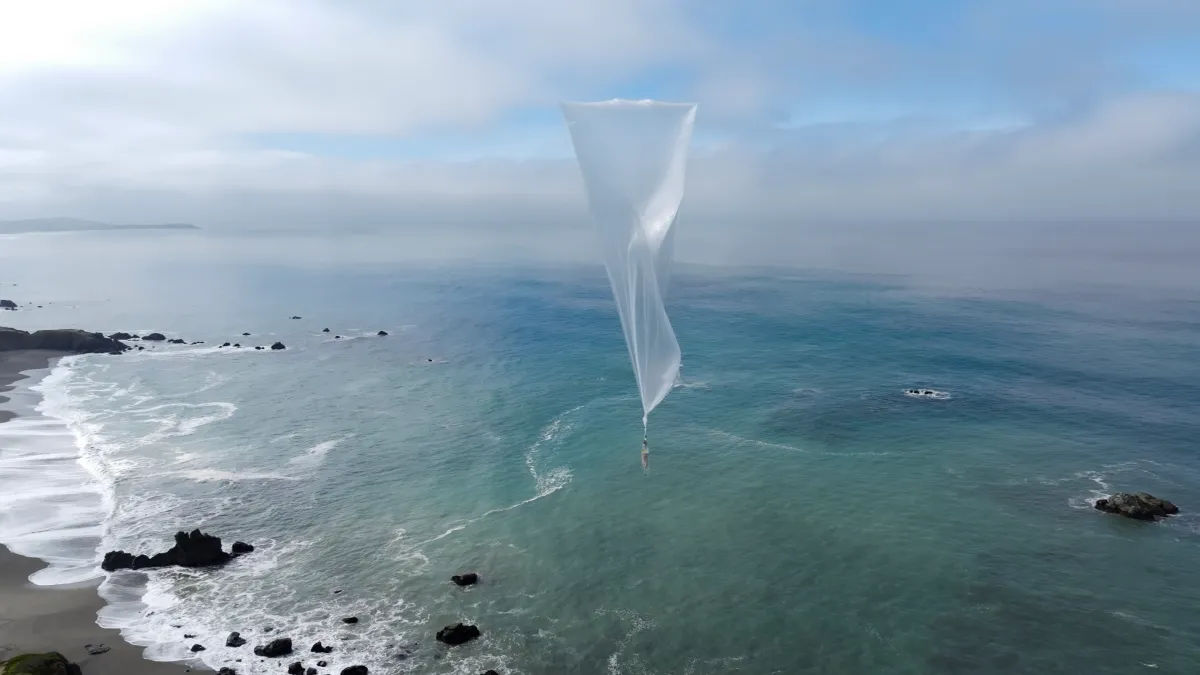
WindBorne operates a constellation of approximately 700 autonomous weather balloons distributed across the globe. These balloons are equipped with atmospheric sensors that continuously collect environmental readings. The company sells individual sensor data to customers while simultaneously feeding this empirical data into its proprietary AI weather forecasting model.
Technology & Innovation
Recent milestones underscore WindBorne's technological edge:
- WeatherMesh 6: The latest version of the company's forecasting model, which promises more accurate predictions than traditional systems run by the European Centre for Medium-Range Weather Forecasts (ECMWF).
- Unpowered Flight System: In August 2026, WindBorne became the first organization to deploy an unpowered flight system—one with no engine—to collect data within the eye of a typhoon. The company navigates these balloons by adjusting altitude, bleeding air, or dropping sand as ballast, enabling precise positioning in extreme weather environments.
- AI Integration: WindBorne pioneered the direct injection of real-world weather data into deep-learning models, marking a shift from purely physics-based simulations to hybrid approaches that combine historical observations with machine learning.
Leadership & Funding
Co-founder and Chief Technology Officer Andrey Sushko stated that the contract was awarded without competitive bidding, reflecting the government's assessment that WindBorne was the sole provider capable of meeting the Air Force's unique operational needs for global weather data collection. The company recently closed a $37 million Series B financing round to scale its operations. CEO John Dean highlighted the strategic importance of this milestone, noting it supports both the growth of the balloon constellation and ongoing R&D efforts to enhance balloon hardware and performance.
Historical Context
WindBorne has maintained close collaboration with U.S. government partners, including the National Weather Service and the Navy. The company was among the first to integrate empirical sensor data directly into deep-learning weather models—a capability that has been gaining traction since the emergence of transformer architectures and large-scale weather datasets from organizations like ECMWF.
Why It Matters
This contract signifies several important trends in the technology landscape:
- AI in Weather Prediction: Weather forecasting is undergoing a transformation. Traditional methods rely on expensive supercomputers simulating atmospheric physics. WindBorne's approach demonstrates how combining real-time sensor data with AI can produce faster, more accurate forecasts—potentially improving disaster preparedness and resource management.
- Startup Growth & Venture Capital: At $49 million in value, this contract represents significant capital infusion for a startup. The recent $37 million Series B round combined with this government contract positions WindBorne for rapid expansion of its global balloon network and R&D capabilities.
- Government-Industry Partnerships: The Air Force's preference for WindBorne suggests recognition of the strategic value of autonomous, data-collecting platforms for national security and emergency response. Such partnerships can accelerate innovation cycles and address critical gaps in existing infrastructure.
What It Means for Readers
For Technology Enthusiasts: WindBorne's success illustrates the convergence of aerospace engineering, IoT (Internet of Things), and artificial intelligence. The company's ability to maneuver balloons through extreme weather using only altitude and ballast control showcases innovative navigation strategies that could inspire other autonomous systems.
For Investors & Business Leaders: The case exemplifies how niche technology companies can secure large-scale government contracts by demonstrating tangible, mission-critical capabilities. The combination of a proven balloon network and cutting-edge AI makes WindBorne an attractive target for further investment.
For Weather Professionals: While traditional meteorological services remain valuable, this development signals a growing complementarity between human expertise and machine learning in forecasting. Organizations considering weather-dependent operations may find WindBorne's data a complementary source alongside conventional models.
What Happens Next
Early orders have already begun generating revenue, with $1.7 million collected from the Air Force. Executives indicate that subsequent orders are expected to follow as the contract matures. Given the contract's flexible ordering structure—pay-as-needed for specific regions and timeframes—future growth will depend on the Air Force's operational priorities and the expanding utility of WindBorne's data across different geographic areas and seasons.
As the company continues to scale its balloon constellation and refine its AI models like WeatherMesh 6, its position as a pioneer in operational weather data collection appears poised for further strengthening.
VANTIX Takeaway
WindBorne's nearly $50 million contract with the U.S. Air Force validates the strategic value of merging physical sensor networks with AI-driven forecasting. For startups and innovators, this deal underscores how government partnerships can catalyze growth and accelerate the commercialization of emerging technologies like autonomous weather observation systems.


