What Happened
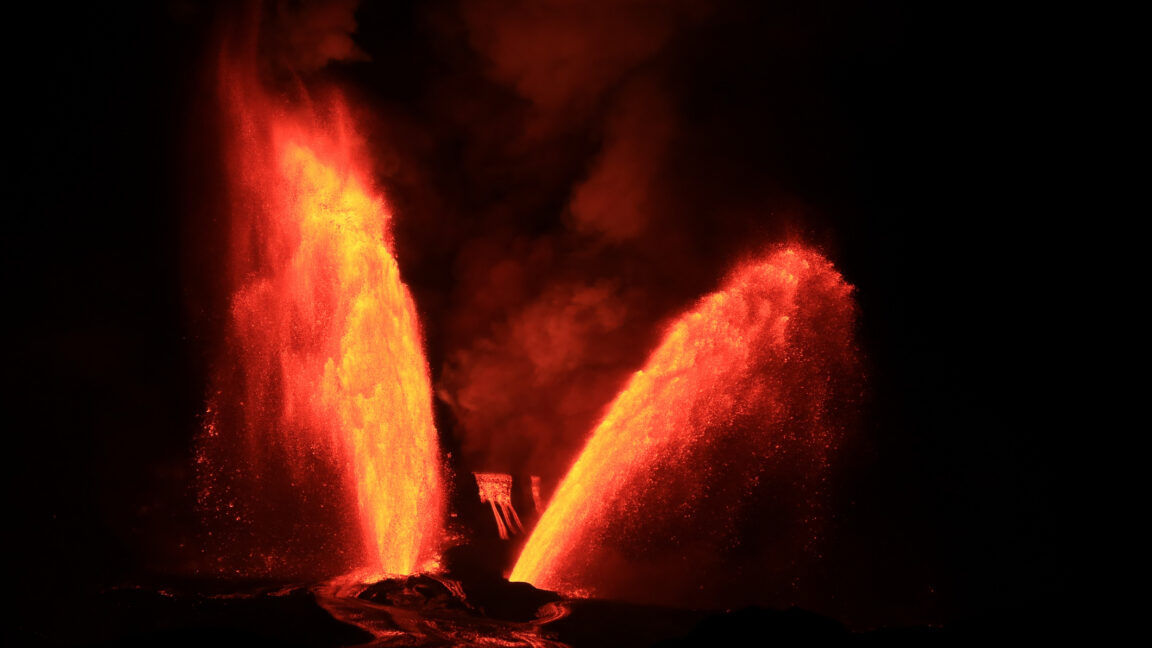
US Geological Survey (USGS) researchers have published findings in the journal Science analyzing the physical mechanisms driving high-reaching lava fountains at Hawaii's Kilauea volcano. Using an extensive array of 35 monitoring stations, scientists documented rapid ground expansion preceding eruptive events, offering unprecedented empirical data on how these intense volcanic displays form.
The Key Details
- Accelerated Ground Expansion: After a 2018 eruption partially drained Kilauea's subterranean lava reservoirs, magma refilling accelerated in 2019 with peak inflation exceeding 22 centimeters per year. In 2023, inflation rates doubled to 57 centimeters per year (roughly half a meter of ground swelling per day during peak periods) and expanded into a nearby caldera.
- Dense Sensor Array: Researchers captured the activity using 35 dedicated monitoring sites equipped with seismic, infrasound, geodetic, gas sensors, as well as thermal and visual cameras.
- Rarity at Kilauea: Despite being Hawaii's youngest and most active volcano, Kilauea has experienced only three fountaining episodes since 1823.
- Lava Dynamics: While hotspot volcanism usually manifests as slow, manageable lava flows, specific conditions at volcanoes such as Kilauea, Mount Etna, and sites in Iceland can propel molten rock several hundred meters into the sky.
Why It Matters
High-altitude lava fountains represent one of the most violent manifestations of hotspot volcanism, yet the exact pressure and gas dynamics driving them remain uncertain. By combining high-resolution geodetic and seismic sensor data with thermal observations, researchers are gaining clearer insights into subsurface magma storage and transport, which is essential for evaluating volcanic hazard models.
What It Means for Readers
- Monitoring Systems: The research illustrates how multi-modal sensor networks—combining satellite-based geodetic measurement with ground-based infrasound and thermal imaging—allow scientists to detect deep magma movements before surface manifestations occur.
- Volcanic Preparedness: Identifying extreme ground inflation rates as precursor signals helps volcanologists refine early-warning indicators for surrounding regions.
What Happens Next
Geoscientists are continuing to test existing magma fluid-dynamics models against the newly gathered dataset from Kilauea to pinpoint the precise thresholds that cause deep magma reservoirs to transition into explosive surface fountains.
VANTIX Takeaway
Data gathered from Kilauea's 35 sensor stations revealed ground inflation doubling to 57 centimeters a year before fountain eruptions. This detailed recording provides geoscientists with critical evidence to unlock the deep physical processes driving high-volume lava fountains.


