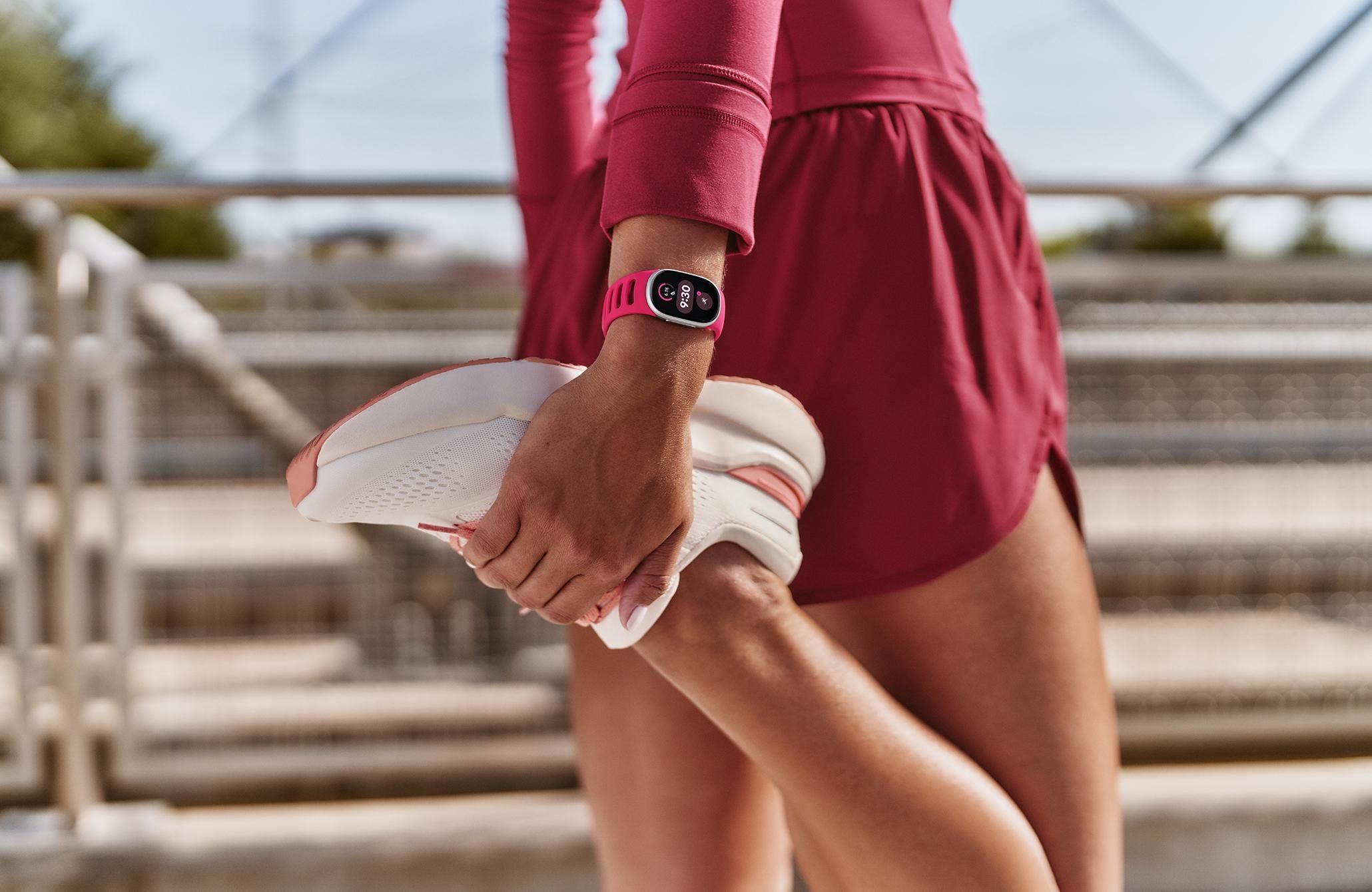
# Google Launches Fitbit Edge, a Mid‑Range Wearable for Screen‑Lite Users
What Happened
Google has made the Fitbit Edge official, filling a gap between its entry‑level Fitbit Air and the higher‑end Google Pixel Watch 5. The new tracker is positioned as a "middle‑of‑the‑road" option that combines the Air’s simplicity with some of the Pixel Watch’s smart features, aiming at users who experience "smartwatch fatigue" but still want notifications and health tracking.
The Key Details
- Placement in the lineup: The Edge sits between the recently launched Fitbit Air and the Google Pixel Watch 5. It is described as Google’s answer to the aging Fitbit Charge 6.
- Display: A 46 % larger OLED screen compared with the Charge 6, housed in an 11.5 mm thick case with a physical side button.
- Battery: Replaceable battery delivering roughly one week of use; two days with the always‑on display enabled. A five‑minute charge provides about a day of power, while a full charge takes 90 minutes. The charger is the same proprietary design used by the Air.
- Health sensors: Includes an EKG sensor for atrial‑fibrillation detection, a skin‑temperature sensor, SpO₂ and optical heart‑rate sensors, plus standard motion‑tracking sensors.
- Durability: IP68 rating and 5 ATM water resistance, making it safe for swimming.
- Hardware omissions: No microphone or speaker (so calls cannot be taken from the wrist), and no NFC chip for contactless payments. The lack of NFC is notable because the Edge essentially replaces the Charge 6 and costs $20 more.
- Software: Runs a redesigned Fitbit OS (not Wear OS) with a user interface that borrows heavily from the Pixel Watch’s widgets. It receives Google Health software updates, adding features such as blood‑pressure trends and insulin‑resistance levels.
- Non‑fitness features: Clock, timers, alarms, media controls, push notifications, and heart‑rate broadcasting to compatible gym equipment.
- Auto activity tracking: A revised motion model that improves accuracy by about two times and supports over 100 activities. It can infer activities based on location (e.g., tennis on a court) and routine (e.g., yoga on Tuesday mornings). This model will also roll out to the Air.
- GPS: Claimed to be 40 % more accurate than the Charge 6, thanks to on‑device improvements. Turn‑by‑turn directions are supported, though the software‑based post‑processing used in the Pixel Watch 5 is not included.
- Pricing and bundles: $179.99, which includes three months of Google Health Premium. A Stephen Curry edition is available for $219.99.
- Strap options: Multiple strap styles, including metal links for a jewelry‑like look. The Air also gets a new metal‑mesh strap priced at $69.99, launching October 27.
Why It Matters
The Edge addresses a growing consumer segment that wants a device with a screen for glanceable information but does not need the full capabilities of a smartwatch. By positioning it between the Air and Pixel Watch 5, Google can capture users who are fatigued by complex wearables yet still desire health monitoring and notifications. The inclusion of an EKG sensor and improved auto‑tracking accuracy also raises the bar for mid‑range fitness trackers, potentially influencing competitors’ feature sets.
What It Means for Readers
- Everyday users: If you find smartwatches overwhelming, the Edge offers a simpler interface with essential health data and notifications without the noise of calls or payments.
- Fitness enthusiasts: The doubled accuracy of auto activity tracking and the 40 % more precise GPS can improve workout logging, especially for the over 100 supported activities.
- Health‑focused consumers: The presence of an EKG sensor and skin‑temperature monitoring provides medical‑grade insights previously reserved for higher‑priced devices.
- Buyers comparing options: The Edge’s $179.99 price point (including three months of Google Health Premium) is higher than the Air but lacks NFC, making it a trade‑off between features and cost.
- Developers and creators: The device’s support for heart‑rate broadcasting to gym equipment opens possibilities for integrated fitness‑tracking ecosystems.
What Happens Next
Google has already announced the Edge’s availability, and the Air’s new metal‑mesh strap will launch on October 27. Future software updates will bring Google Health features such as blood‑pressure trends and insulin‑resistance monitoring to the Edge, keeping it competitive as the wearable market evolves.
VANTIX Takeaway
The Fitbit Edge demonstrates Google’s strategy of using Fitbit’s hardware expertise to fill niche gaps in its wearable portfolio. For users seeking a balance between a screenless tracker and a full smartwatch, the Edge offers a pragmatic middle ground with notable health‑tracking upgrades. The key takeaway is that the Edge redefines the mid‑range wearable category by delivering medical‑grade sensors and improved activity accuracy without the premium price of a smartwatch.
--- Tags: Fitbit Edge, Google, Fitbit, Pixel Watch 5, Fitbit Air, Google Health Premium, EKG, IP68, Stephen Curry edition, wearables, health tracking, GPS accuracy


