What Happened
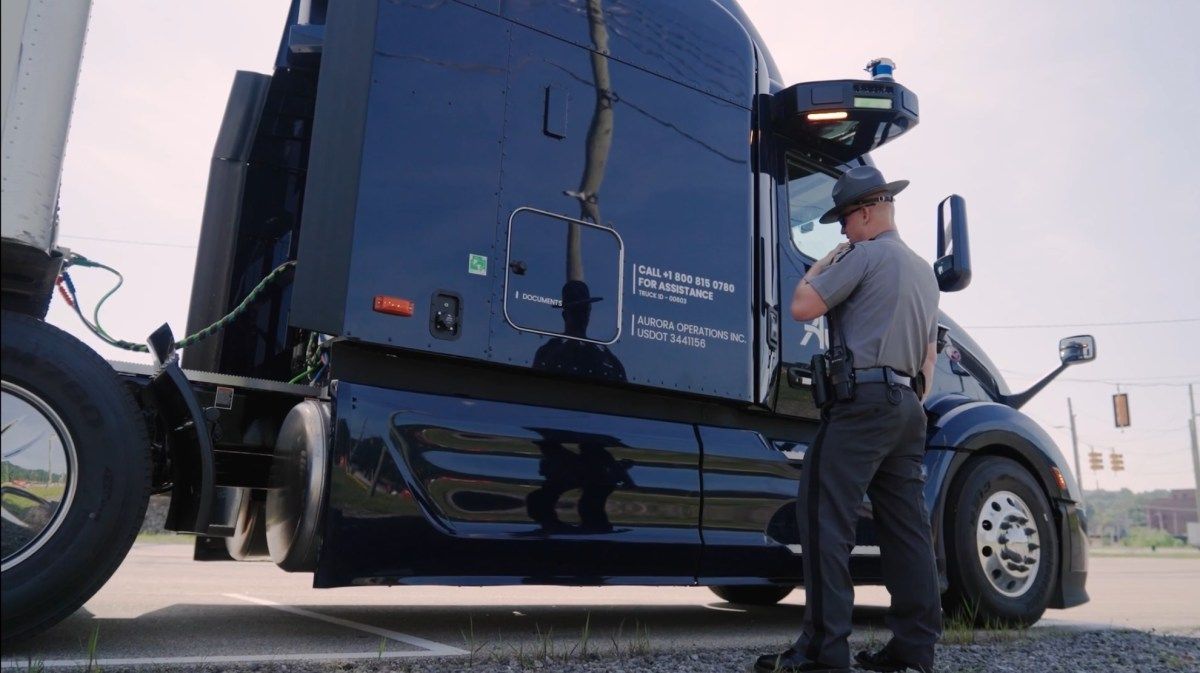
The Federal Motor Carrier Safety Administration (FMCSA) has issued a five‑year exemption that allows Aurora Innovation and Kodiak AI to replace traditional reflective warning triangles with cab‑mounted warning beacons. This removes a key regulatory obstacle that had forced autonomous‑truck developers to keep a human driver on standby to set up roadside devices when a mechanical issue forced a pull‑over.
The Key Details
- Regulatory background: Under current rules, a human driver must pull over, activate hazard lights, and place reflective warning triangles within ten minutes of a breakdown. Autonomous trucks lack a driver to perform this task.
- Legal battle: Aurora sued federal safety regulators over the requirement, lost in court, and appealed to the District of Columbia Court of Appeals. The company had a temporary waiver while awaiting a decision.
- The exemption: The FMCSA’s new five‑year waiver permits companies to substitute roadside devices with cab‑mounted beacons that alert other road users without putting a person in harm’s way.
- Industry response: Daniel Goff, Kodiak AI’s vice president of external affairs, said the exemption will help “usher in an autonomous era of freight movement on U.S. roads, one that can save lives and improve the efficiency of goods delivery.” Gerardo Interiano, Aurora’s head of government relations and public affairs, echoed the sentiment, calling the beacons a “critical, 21st‑century solution that enhances roadside safety.”
- Open question: Whether these cab‑mounted beacons will eventually become standard equipment across the entire trucking industry remains to be seen.
Why It Matters
The exemption directly addresses a safety‑and‑logistics bottleneck that has slowed the commercial rollout of self‑driving trucks. By allowing autonomous vehicles to use in‑cab warning systems, regulators acknowledge that traditional human‑based safety measures are not feasible for driverless operations. This step signals growing confidence that AI‑driven freight can operate safely on public roads, potentially reshaping supply‑chain economics and reducing reliance on human drivers.
What It Means for Readers
- Logistics firms and shippers: Faster, 24/7 freight movement could become feasible as autonomous trucks clear regulatory hurdles.
- Truck drivers and unions: The change may accelerate automation‑related workforce shifts, prompting a need for reskilling discussions.
- Investors and tech observers: Regulatory progress validates billions of dollars poured into autonomous‑vehicle startups, suggesting a nearer‑term path to profitability.
- Policymakers: The decision highlights the need for forward‑looking safety standards that account for AI‑driven vehicles rather than legacy human‑centric rules.
- African markets: No direct impact; the story is a U.S./global development.
What Happens Next
- The five‑year exemption provides a clear timeline for Aurora, Kodiak AI, and other developers to test and deploy cab‑mounted beacon systems.
- Industry groups will watch whether the success of these systems leads to broader adoption across conventional trucking fleets.
- Future regulatory reviews may determine if the technology becomes a mandatory safety feature for all heavy‑duty vehicles.
VANTIX Takeaway
Readers should now understand that a pivotal regulatory roadblock for autonomous trucks has been cleared. The FMCSA’s exemption enables AI‑driven freight operators to use in‑cab warning beacons, moving the sector closer to commercial reality and setting the stage for wider adoption of self‑driving logistics technology.
Other Mobility News This Week (Brief Overview)
- Waymo secured a $5 billion debt package led by PIMCO, Blackstone, and Sixth Street to accelerate commercial expansion.
- Redwood Materials continued restructuring, losing its VPs of engineering, operations, treasury, and external affairs after earlier layoffs.
- Bloom raised $3.6 million to become a manufacturing hub, while Flai secured $27 million for AI dealership software.
- Parallel Systems closed a $100 million Series C for autonomous rail freight.
- Uber agreed to buy ezCater for $2.3 billion in cash.
- Flock cut about 270 jobs amid backlash over its surveillance tech.
- Lucid Motors produced 2,954 EVs in Q3, a 54 % drop year‑over‑year, as it limits output to match demand.
- Tesla renamed its European advanced driver assistance system to “Tesla Assisted Driving” after German ministry pushback.
- Uber and Pony.ai plan a London robotaxi launch as part of an expanded European partnership.
These items illustrate a dynamic week in autonomous and mobility tech, with funding, regulatory shifts, and market adjustments across the sector.


