# What Happened
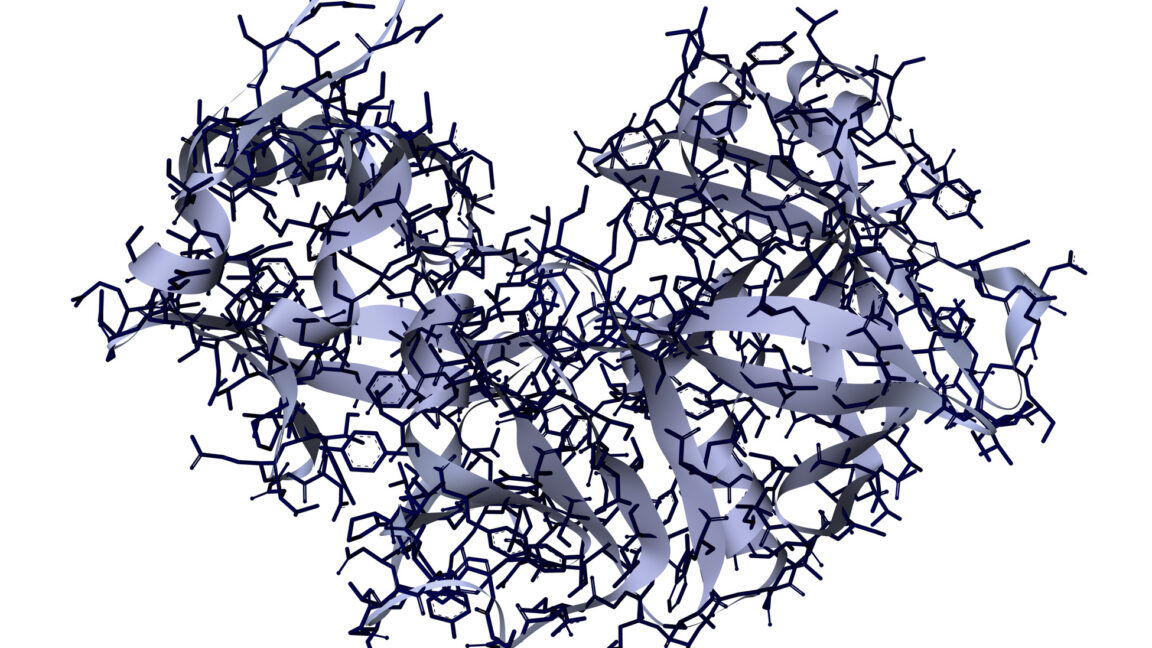
Researchers have used artificial-intelligence protein design tools to create enzymes capable of cutting specific proteins apart. The development, led by David Baker's lab at the University of Washington, repurposes the catalytic cores of natural proteases — enzymes that break peptide bonds — and uses AI to redesign their surrounding structure. The result is a new class of designer enzymes that can be tuned to target particular protein sequences, with the researchers demonstrating effectiveness by cutting proteins linked to neurological diseases.
# The Key Details
Peptide bonds, which link amino acids into protein chains, are chemically extremely stable — estimates suggest they have a half-life of several hundred years in water without intervention. Organisms normally rely on proteases to break these bonds, and the researchers worked with two types: a zinc protease from a crayfish's digestive system and a cysteine protease from yeast.
The AI design process began with the known catalytic cores of these proteases. Using RFdiffusion2, the team generated backbone structures that positioned the key catalytic amino acids in proximity to a target sequence. ProteinMPNN then populated those backbones with specific amino acids, constrained by the need to maintain proper folding and catalytic function.
For the cysteine protease, the researchers produced 12 backbones populated with 69 different amino-acid sets; 13 designs showed catalytic activity (a 19 percent success rate), though all were less active than the yeast enzyme used as a model. The zinc protease effort was larger in scale — 135 initial designs were tested, with only 14 showing weak activity when missing a water molecule needed for the reaction. When the researchers explicitly placed a water molecule in the correct position as a design constraint, success jumped to 35 out of 38 designs showing some catalytic activity.
Activity was further improved through random mutations. The best-identified variant accelerated peptide-bond cleavage by a factor of 109 while remaining highly specific for its target sequence. The zinc "v2" version, incorporating some random mutations, proved 30 times more active than its predecessor and accelerated cleavage by a factor of 10^10.
As a final demonstration, the researchers designed zinc proteases capable of targeting proteins associated with Alzheimer's and frontotemporal dementia. Redirecting the enzymes to new target sequences initially failed, requiring the team to start the design process anew. They ultimately succeeded in creating proteases that could cut the intended targets within cells.
# Why It Matters
The work matters because it shows AI can move beyond predicting protein structures — as AlphaFold3 does — to actively designing functional enzymes with specified cutting activity. This represents a step toward a future where tailored proteins could one day modulate disease-related pathways. The researchers demonstrated that their designed enzymes can distinguish between target and non-target protein sequences, a key requirement for therapeutic use.
At the same time, the study highlights current limitations. The AI tools excel at satisfying structural constraints — getting amino acids into the right places — but are less reliable at producing the subtle catalytic efficiencies that evolved enzymes possess. The researchers themselves noted that introducing random mutations, which made only subtle structural tweaks, still yielded considerably more active enzymes, suggesting that structure alone does not explain all of an enzyme's function.
# What It Means for Readers
For technology enthusiasts, the research is a concrete example of AI pushing into biological design in ways that were not clearly feasible a few years ago. For readers following developments in medicine, the work suggests a potential future route for targeting malformed proteins that drive genetic diseases, though the path from petri dish to patient remains long.
The study also underscores a practical consideration: designed proteins face hurdles in delivery. Proteins are large molecules that can trigger immune responses, and getting them to the right location — especially inside cells — requires overcoming significant biological barriers. If a therapy requires the protease inside specific cells, the gene encoding it would need to be delivered to those cells, adding another layer of complexity.
# What Happens Next
The researchers indicate that improving enzyme activity beyond the levels achieved through random mutations remains an open question. Incorporating additional constraints beyond physical location — such as those aimed at enhancing catalytic efficiency — could be a direction for future work. On the therapeutic side, much work remains on delivery mechanisms, immune-response management, and testing in animal models before any clinical applications could be considered.
# VANTIX Takeaway
After reading this, the most important thing to understand is that AI-designed proteins can now be engineered with specific cutting functions, but turning this capability into real-world therapies will require solving significant delivery and activity challenges that current tools do not yet address.


