What Happened
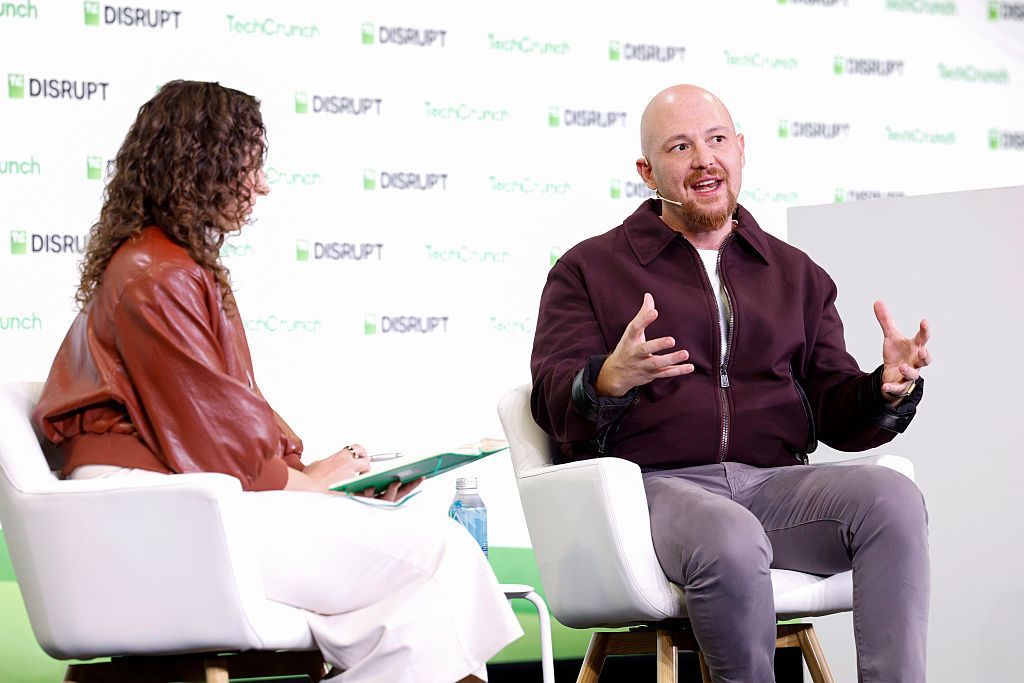
At TechCrunch Disrupt in San Francisco, Replit CEO and co-founder Amjad Masad outlined his vision for the future of work: the "self-driving company." In this model, AI agents take over routine, repetitive tasks while human employees concentrate on strategic decisions, creativity, and judgment.
Masad, who has observed AI's impact on workplaces firsthand through businesses adopting Replit's AI coding tools, said the shift is already underway — and many organizations are not yet prepared for it.
The Key Details
Masad explained that Replit's own operations have fundamentally changed over the past year, particularly after AI agents became more reliable earlier this year. He described the company as "self-improving," with much of the day-to-day work now driven by AI agents.
One concrete example he shared was how Replit handles customer support. When a support ticket arrives, an AI agent first reviews it by examining GitHub issues, the codebase, and Linear tickets. By the time the request reaches a human support representative, the agent has already compiled relevant context, allowing the person to make informed decisions quickly.
If the support person decides to submit a patch to fix an issue, Masad said it's just a single click to deploy another agent to carry out the work. This creates a loop where "agents did most of the work, but crucially, there's human judgment in the middle."
Why It Matters
Masad emphasized that AI is not replacing jobs but reshaping them. Instead of performing routine tasks, employees are spending more time discussing priorities, whiteboarding solutions, and focusing on architecture and design.
"We're spending a lot more time figuring out what to work on," he said. "I go around the company, I see a lot more discussions, a lot more whiteboarding. We spend a lot more time on architecture, how to build things."
He also noted that conversations with other businesses increasingly center on how AI can boost productivity and job satisfaction. According to Masad, AI agents make work less monotonous and more creative — a positive vision of the future that he believes Silicon Valley is not communicating effectively.
What It Means for Readers
For technology professionals and developers, Masad's vision suggests a growing need to complement AI tools with strong judgment, taste, and strategic thinking. As AI handles more technical execution, human value shifts toward defining problems, setting direction, and making nuanced decisions.
Businesses exploring AI adoption may find that the biggest gains come not from replacing staff, but from redesigning workflows so that agents handle the bulk of routine work while humans guide outcomes.
What Remains Unknown
While Masad described Replit's internal transformation, he did not provide specific metrics on productivity gains, cost savings, or employee retention. The broader implications for industries outside of tech — and for roles that are harder to automate — remain to be seen.
VANTIX Takeaway
The future of work, according to Replit's CEO, is not about humans versus machines, but about machines amplifying human capabilities. Companies that successfully integrate AI agents into their workflows may find their teams more focused on meaningful, high-value work — but only if they preserve space for human judgment and creativity.


