# What Happened
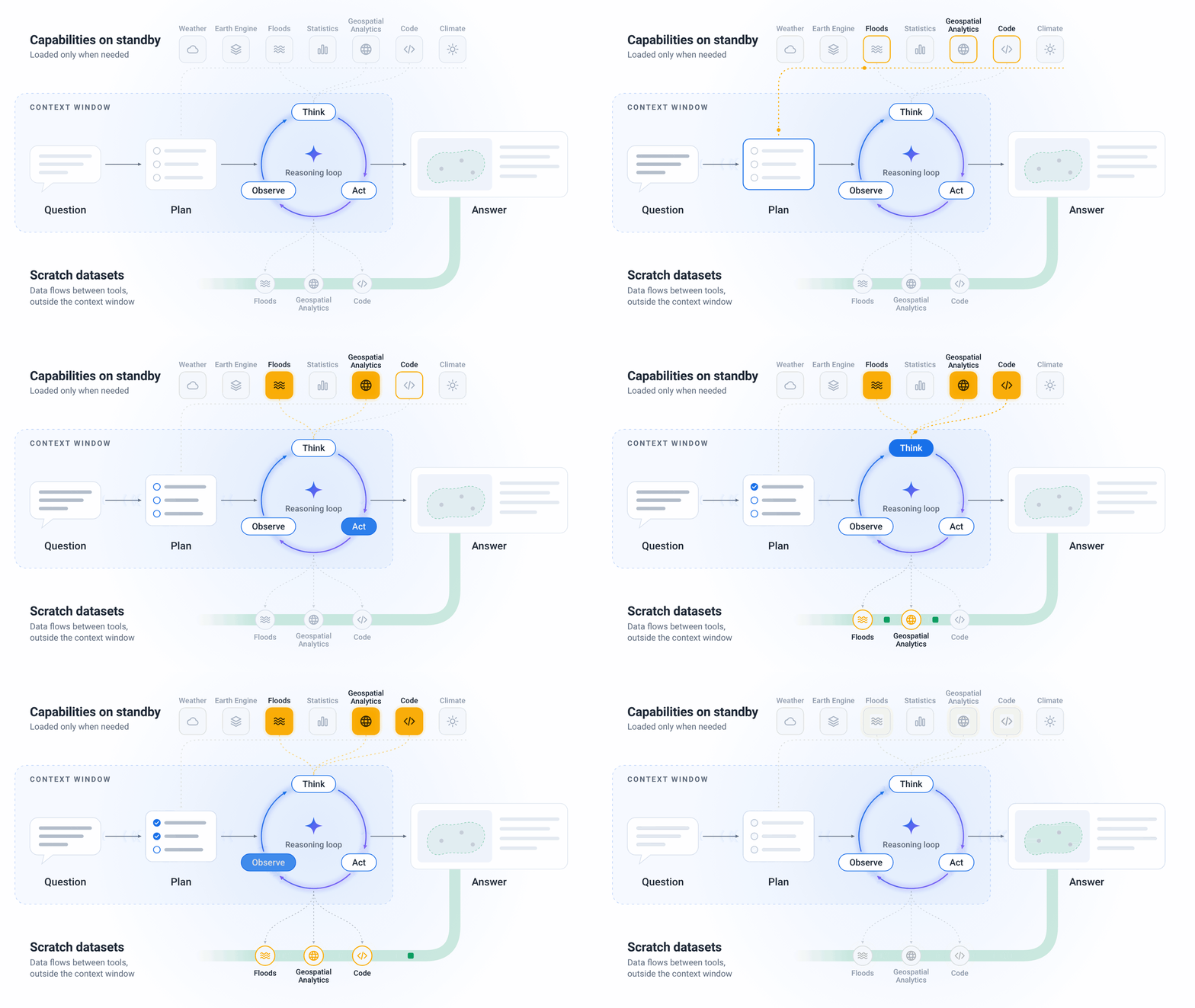
Google Research Blog published a post on October 14, 2026 titled "Putting Earth AI to work: Geospatial agents for our planet's biggest challenges." The article introduces Earth AI, a project that employs geospatial agents—AI‑driven tools that analyze satellite and geospatial data—to tackle large‑scale environmental problems.
# The Key Details
- Project name: Earth AI
- Goal: Use geospatial agents to address the planet’s biggest challenges, including climate change, biodiversity loss, and land degradation.
- Technology: The initiative relies on satellite imagery and AI algorithms to generate actionable insights about environmental conditions.
- Publication: The announcement appeared on the Google Research Blog, indicating an internal research effort that may lead to future products or services.
- Scope: The blog post provides a high‑level overview but does not disclose specific technical specifications, release timelines, or pilot locations.
# Why It Matters
The ability to monitor Earth’s changing conditions in near‑real time could improve climate modeling, support conservation strategies, and inform policy decisions. By making geospatial analysis more accessible through AI, the project may enable researchers, NGOs, and governments to respond more quickly to environmental crises. However, the current information does not specify how the agents will be deployed, who will have access, or what concrete outcomes are expected.
# What It Means for Readers
- Everyday technology users: May benefit indirectly from more accurate climate forecasts and early warning systems that affect weather reporting and disaster preparedness.
- Smartphone buyers: Not directly impacted by this announcement, but broader AI‑driven environmental tools could integrate into mobile apps for health, travel, or sustainability tracking.
- Businesses: Companies focused on sustainability could use the resulting data to improve supply chain resilience, meet regulatory requirements, or enhance corporate social responsibility reporting.
- Developers: The project may eventually provide APIs or datasets, offering new opportunities for building applications that leverage geospatial AI.
- Students and researchers: The initiative signals growing interest in Earth‑system AI, potentially expanding academic collaborations and research funding.
- African users or markets: If the technology is made available in the region, it could support agriculture monitoring, water resource management, and disaster response across African countries. No specific regional rollout has been announced.
# What Happens Next
The blog post does not outline a concrete roadmap, pilot programs, or release schedule. It remains unclear when or how Earth AI will move beyond the research phase, or which partners will be involved.
# VANTIX Takeaway
Google’s Earth AI announcement highlights the growing role of AI‑driven geospatial tools in addressing global environmental challenges. While details are still sparse, the initiative underscores the potential for advanced analytics to inform climate action and sustainability efforts worldwide.


