What Happened
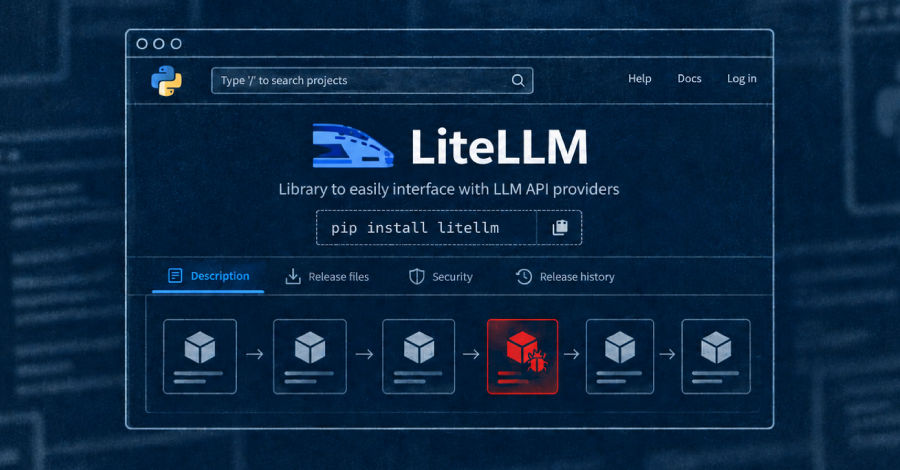
LiteLLM, a popular open-source AI gateway that provides a unified interface for calling large language models, confirmed on Wednesday that its software supply chain was compromised. Attackers managed to publish a malicious version of the Python package — version 1.107.0 — to both the Python Package Index (PyPI) and Docker Hub in the early hours of October 21, 2026.
The compromised package included two dangerous components: a credential stealer designed to harvest authentication tokens and other secrets from the host environment, and a backdoor that could allow persistent remote access.
The Key Details
- Timeline: The malicious release was pushed at approximately 4:00 a.m. UTC on October 21, 2026. LiteLLM disclosed the incident the following day.
- Distribution channels: Both PyPI (the primary Python package repository) and Docker Hub (the container image registry) received the tainted artifacts.
- Malicious payload: Version 1.107.0 contained a credential stealer and a backdoor — a combination that could lead to further compromise of any system that installed or ran the package.
- Suspected entry point: LiteLLM's investigation points to a GitHub token that may have been exposed in the project's own AI Gateway logs. That token could have granted the attackers sufficient access to bypass "multiple independent security controls" and trigger a release.
- Scope of compromise: The attackers defeated several layers of protection, suggesting a deliberate, targeted operation rather than an opportunistic exploit.
Why It Matters
Supply chain attacks on widely used open-source packages are among the most damaging threat vectors in modern software development. A single compromised release can propagate silently into thousands of downstream projects, CI/CD pipelines, and production environments.
LiteLLM is used by developers and organizations building AI-powered applications. Its position as an intermediary between applications and multiple LLM providers means it often holds or processes API keys for services like OpenAI, Anthropic, Azure, and others. A credential stealer embedded in the gateway itself creates a direct path for those keys to be exfiltrated.
The fact that the attackers bypassed multiple security controls — and may have done so using a token leaked by the project's own logging infrastructure — underscores a growing risk: observability and logging systems can themselves become attack surfaces if they inadvertently capture secrets.
What It Means for Readers
For developers and engineering teams:
- If you pinned or automatically upgraded to LiteLLM 1.107.0, treat the environment as potentially compromised. Rotate all API keys, database credentials, and tokens that the gateway could access.
- Audit logs for unusual outbound connections or authentication attempts originating from systems that ran the malicious version.
- Consider pinning dependencies to known-good versions and using tools that verify package integrity (such as `pip-audit`, `sigstore`, or SBOM-based verification).
For security teams:
- Review your own logging and observability pipelines. Ensure secrets are redacted before logs are stored or shipped to third-party services.
- Evaluate whether your CI/CD release workflows require multi-party approval or hardware-backed signing for publish steps.
For organizations building AI applications:
- This incident highlights that AI gateways and orchestration layers are high-value targets. They concentrate access to multiple model providers and often run with elevated permissions.
- Treat the AI gateway as critical infrastructure: apply network segmentation, least-privilege credentials, and continuous monitoring.
What Happens Next
LiteLLM has not yet published a full post-mortem. The project maintainers are expected to detail:
- The exact mechanism of the token leak
- Which security controls were bypassed and how
- Steps taken to harden the release pipeline
- Guidance for affected users
Users should monitor the official LiteLLM GitHub repository and security advisories for a patched release and detailed remediation instructions.
VANTIX Takeaway
A single leaked token in a log file may have been enough to compromise a widely used AI gateway and distribute malware to every downstream user. The lesson is not just about securing tokens — it's about recognizing that every component of your development and observability stack can become an attack vector. Treat logs, CI/CD pipelines, and package registries with the same rigor you apply to production secrets.


