What Happened
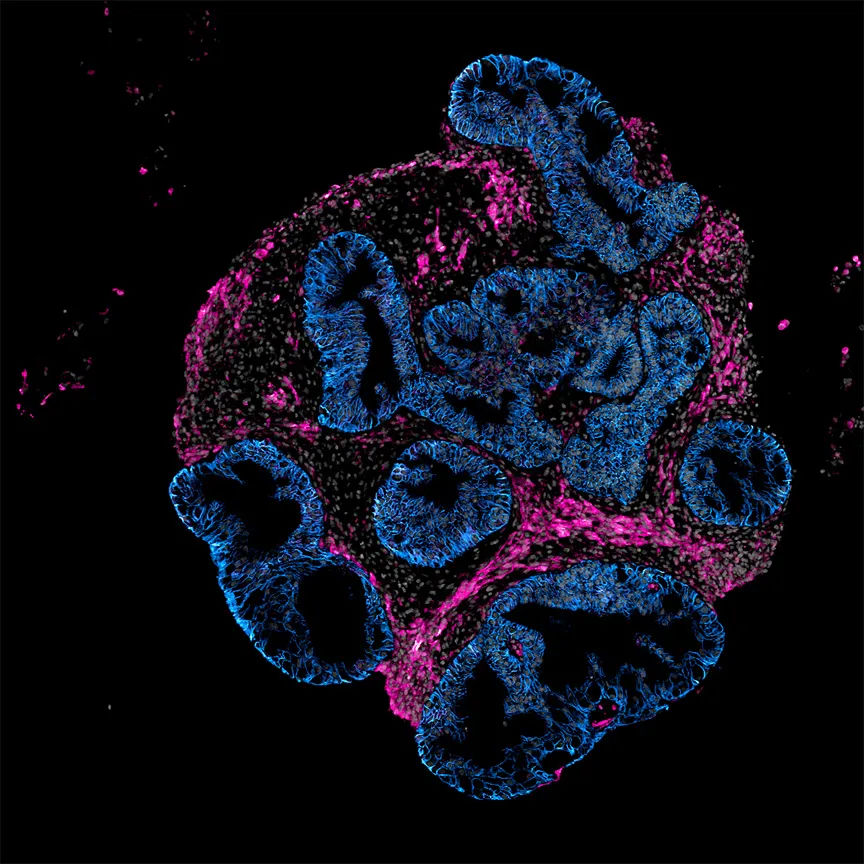
Intero Biosystems, a Denver-based startup spun out of the University of Michigan, is selling lab-grown human intestines to drugmakers. The company's flagship product, GastroScreen, is a human intestinal organoid model that it sells to pharmaceutical, biotech, food, and chemical companies for testing drugs and other compounds. Each organoid is about one millimetre across, and the company ships roughly 100 at a time in a tube — a detail that co-founder and CEO Charlie Childs illustrates by saying, "We're literally shipping mini living organs in the mail to people."
The startup took the stage at TechCrunch Disrupt in San Francisco, where it is one of 20 startups competing for the Startup Battlefield title.
The Key Details
- What GastroScreen is: A human intestinal organoid model containing multiple cell and tissue types found in the human intestine, grown from induced pluripotent stem cells (adult cells reprogrammed to become almost any cell type, obtainable from a blood sample).
- How it's used: Customers can use the organoids as healthy intestinal models or induce disease-like conditions to test how tissue responds to different compounds. Intero also sells the supplies needed to grow and work with them, and runs custom studies for customers.
- Company scale: Founded in 2024, Intero has seven employees, just under 10 customers, and generated more than $400,000 in revenue from Q4 of last year through Q3 of this year. It raised a $2.3 million pre-seed round.
- Validation status: Intero is in the second stage of a three-stage validation process. It has shown that GastroScreen contains key human gut tissues and has demonstrated expected responses to drugs that reduce intestinal inflammation and to compounds known to damage the gut. The final stage — directly comparing GastroScreen results with companies' existing animal and clinical data — is underway with several pharmaceutical partners.
- Competitors: Altis Biosystems (stem cell-derived intestinal models), InSphero (patient-derived intestinal organoids), and MIMETAS (organ-on-chip technology using microfluidic systems).
- Regulatory tailwind: In April of last year, the FDA outlined plans to reduce reliance on animal testing, promoting alternatives including organoids. In March of this year, the FDA issued draft guidance on how drug developers should validate new approach methodologies (NAMs) for regulatory submissions.
Why It Matters
Drug development has long relied on animal models, but differences between species mean what works in animals does not always translate to humans. Most drugs still fail during clinical trials, and as co-founder and CTO Madeline Eiken put it, "we are neither mice nor flat layers of cells." Intero's organoids offer a model that more closely reflects human biology, potentially catching safety issues earlier and reducing the cost and attrition of drug development.
The FDA's shift away from mandatory animal testing and its framework for validating non-animal methods has made pharmaceutical companies more willing to explore technologies like organoids. For drug developers, this is not just an ethical question — it is increasingly a regulatory and commercial one.
What It Means for Readers
For readers in Africa and beyond, this development matters because the drugs people take are largely developed and tested using models that may not reflect human diversity. While Intero's organoids are currently derived from stem cells that can be reprogrammed from any blood sample, the company's longer-term vision includes personalized medicine — using a patient's own cells to test drugs before treatment. That promise, if realised, could eventually reach any market, including African countries where access to specialised healthcare and tailored treatments remains limited.
For technology enthusiasts and students, the story is a reminder that biotechnology is moving beyond animal testing toward organoid and AI-driven models — a shift that could reshape how medicines are developed and how quickly safe treatments reach patients.
What Happens Next
Intero is focused on scaling production. It can currently make a few thousand organoids at a time and is working to automate manufacturing, with the goal of producing hundreds of thousands per batch. The company also plans to license the biological datasets its organoids generate to pharmaceutical and AI companies, seeing an opportunity to feed the data AI models need. Longer term, it wants to move into personalised medicine and, most ambitiously, build an artificial intestine.
VANTIX Takeaway
Intero Biosystems is building lab-grown mini human intestines that could help drugmakers spot safety problems earlier, reduce reliance on animal testing, and eventually personalise treatments. The technology is still being validated, but the regulatory environment is shifting in its favour — and if it succeeds, the way medicines are developed could change for everyone, including patients in Africa.


