What Happened
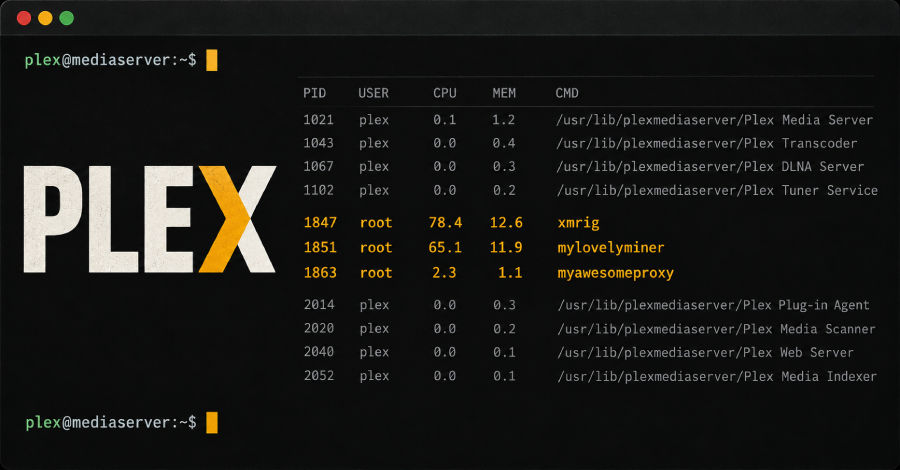
Threat actors have begun exploiting a chain of four vulnerabilities in Plex Media Server, according to a researcher using the online alias boredhackerblog. The vulnerabilities are collectively known as Plex2Shell and are being used to deploy cryptocurrency miners and reverse-proxy software, described in the source headline as a Linux proxy backdoor.
The reported exploitation began one day after a proof-of-concept for the vulnerability chain became public. That timing is significant: the issue moved from publicly demonstrated research to reported misuse within a short period.
What Plex2Shell Involves
Rather than relying on one weakness, the attackers are chaining four vulnerabilities. In practical terms, this means one vulnerability is used to gain the next foothold until the malicious payload can be deployed.
The payload is an important part of the report. Deploying a cryptocurrency miner allows compromised computing resources to be used for mining. The available information also identifies reverse-proxy software as a second objective, but it does not specify the exact software, configuration, or behaviour of that component.
The important distinction is that this is reported exploitation, not merely a theoretical risk. However, the available details do not show that every Plex Media Server installation is affected or indicate how many systems have been targeted.
Why It Matters
A four-stage exploit chain makes careful exposure assessment more important. Administrators cannot assume that addressing only one of the named issues would necessarily interrupt the complete attack path.
The quick movement from public proof-of-concept to reported exploitation also demonstrates why disclosure timelines matter. Once technical details are public, defenders may have limited time to identify vulnerable deployments, apply any available mitigation, and look for signs of unauthorised access.
The reported use of miners and a proxy backdoor suggests that the threat is broader than a single malicious action. It involves placing unwanted software on affected systems and potentially using those systems for further attacker activity. The supplied information, however, does not provide enough detail to explain how the reverse-proxy component was used in the observed attacks.
What Readers and Administrators Should Do Now
The available report does not identify affected Plex versions, fixed releases, or a specific patch process. Those details should be confirmed through official vendor advisories rather than inferred from the article.
Until the exposure is clearer, a prudent response includes:
- Checking official security notices for affected versions and remediation steps.
- Identifying internet-facing Plex Media Server deployments.
- Monitoring systems for unexpected mining activity, unusual resource consumption, or unauthorised proxy software.
- Avoiding assumptions about the scale of the attacks, since the supplied information does not provide victim counts.
What Remains Unknown
Several important questions are not answered in the available material. It does not state which Plex Media Server releases are vulnerable, whether a complete fix is available, how many systems have been compromised, or who is behind the activity. It also does not identify the precise reverse-proxy payload or provide indicators that readers could use to investigate their own systems.
VANTIX Takeaway
Plex2Shell has reportedly progressed from a public proof-of-concept to active exploitation within a day. The central lesson is not that every Plex deployment is compromised, but that organisations running the software need to verify their exposure quickly and rely on official version and remediation details before deciding what action to take.


