What Happened
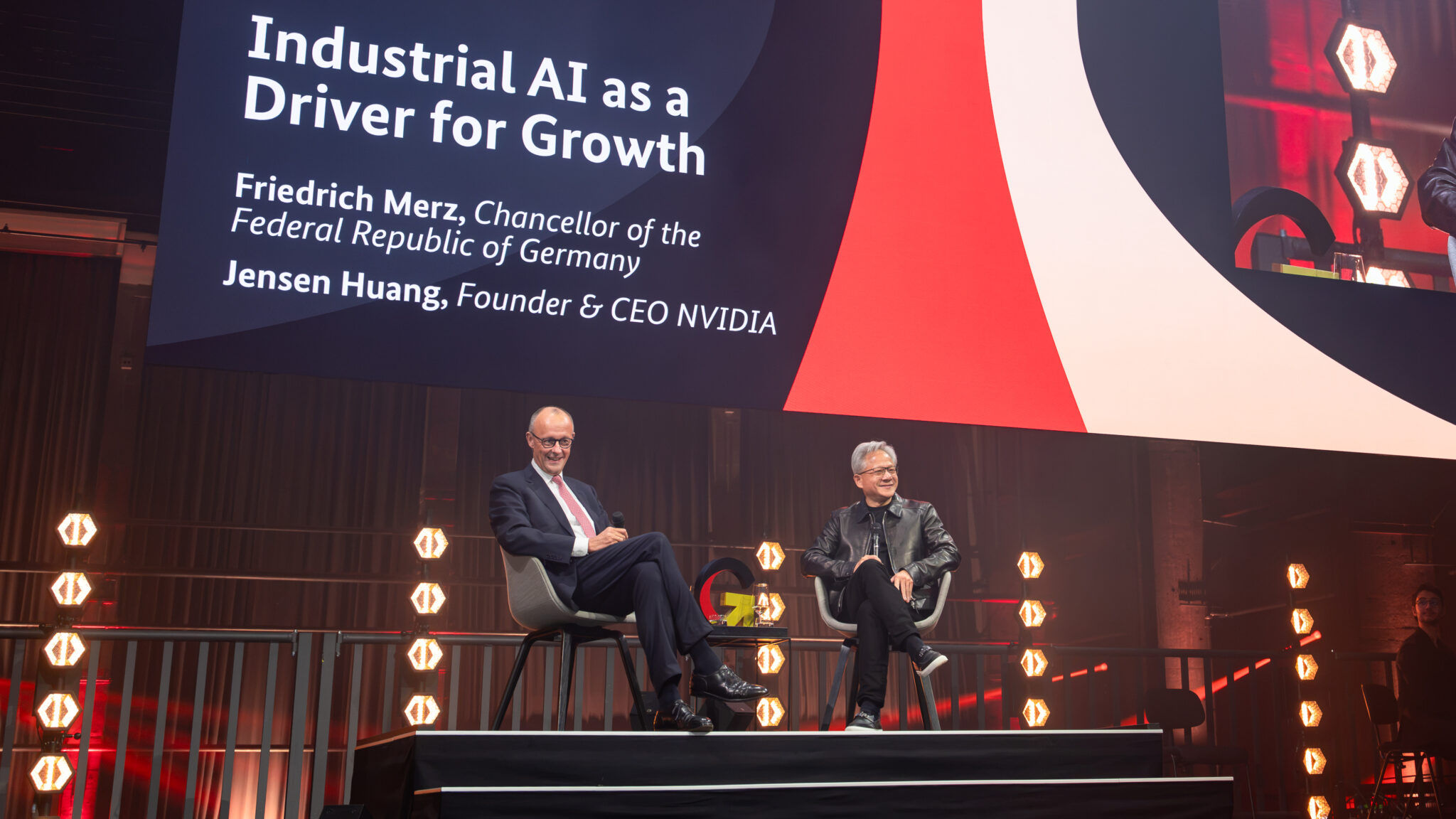
German Chancellor Friedrich Merz and NVIDIA founder and CEO Jensen Huang held a discussion at Kraftwerk, a former power station in Berlin, focused on Germany's artificial intelligence roadmap. The conversation centered specifically on industrial applications of AI — an area where Germany, as Europe's largest manufacturing economy, has significant strategic interests.
The Key Details
According to NVIDIA's official blog, the meeting served to outline how NVIDIA will support Germany's ambition to lead globally in industrial AI. Huang traced the company's longstanding relationship with German industry, which began with gaming systems and workstations and expanded deeply into the automotive sector — a cornerstone of the German economy.
The setting at Kraftwerk, a repurposed industrial landmark, symbolically underscored the theme: transforming traditional industrial infrastructure for the AI era.
Why It Matters
Germany's push for industrial AI leadership represents a deliberate strategy to maintain manufacturing competitiveness by integrating AI into production, logistics, and engineering workflows. NVIDIA's involvement signals that the company sees industrial AI — sometimes called "physical AI" or AI for the physical world — as a major growth vector beyond its data-center and consumer GPU businesses.
For the global technology landscape, the partnership illustrates how national AI strategies are increasingly built around specific industrial strengths rather than generic capability building.
What It Means for Readers
For technology professionals and businesses: The Germany-NVIDIA alignment suggests accelerating investment in AI tooling for manufacturing, simulation, robotics, and digital twins. Developers working with NVIDIA's Omniverse, Isaac, or Metropolis platforms may see expanded German-language support, regional partnerships, and use-case development.
For African markets: No direct African connection was announced in the supplied material. However, the industrial AI frameworks emerging from this partnership could eventually influence how manufacturing and automation technologies are adopted in African industrial zones.
What Happens Next
The NVIDIA blog post indicates an ongoing collaboration, but the supplied summary does not specify concrete timelines, funding commitments, joint research centers, or specific product announcements. Readers should watch for follow-up details from both the German government and NVIDIA regarding implementation steps.
VANTIX Takeaway
Germany is betting its industrial future on AI, and NVIDIA is positioning itself as the primary compute and platform partner for that transition. The meeting signals intent more than execution — the practical outcomes will determine whether this becomes a model for other manufacturing economies.


