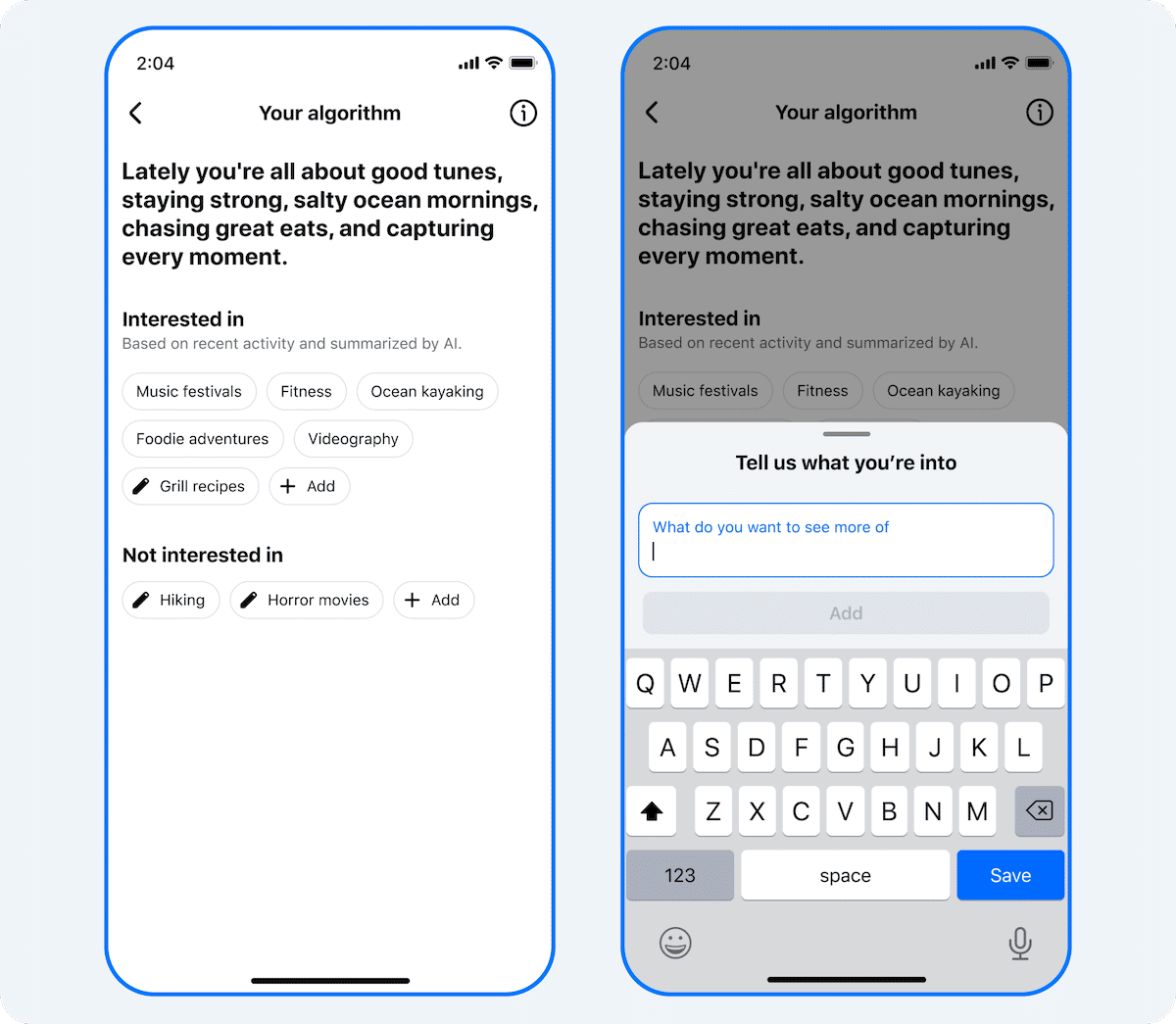
# What Happened Meta announced the launch of its new AI‑powered feature, “Your Algorithm,” on Facebook on Tuesday, 13 October 2026. The feature allows users to influence the content that appears in their Feed and Reels by describing their preferences in natural language, rather than relying solely on automated recommendations.
The Key Details
- Users can type what they want to see more or less of, and the platform adjusts recommendations in real time.
- The feature was first launched on Instagram (June 2026) after an earlier version for Reels in December 2025.
- Facebook’s three‑dot menu has been updated to surface “Your Algorithm” directly, alongside “Interested” and “Not interested" options for individual posts.
- Meta may ask follow‑up questions to better understand user likes and dislikes, enabling more detailed feedback.
- Threads has a similar tool called “Dear Algo” that lets users shape recommended content.
Why It Matters
The introduction of “Your Algorithm” signals a shift from opaque recommendation systems toward greater user agency. By letting people steer the algorithm with plain‑language input, Meta aims to make content discovery more relevant and transparent, aligning Facebook’s approach with the personalization models used by streaming services.
What It Means for Readers
- Everyday users: Can tailor their Facebook experience to show more of topics they enjoy and less of content they dislike, without needing to navigate complex settings.
- Businesses and creators: Changes in user‑driven filtering could affect organic reach, making it important to monitor how audience preferences evolve.
- Developers: The feature highlights a trend toward more interpretable AI systems where user feedback directly shapes model outputs.
- African users: Anyone using Facebook in Nigeria or elsewhere can apply the same natural‑language controls to shape their feed, assuming the feature is rolled out globally.
What Happens Next
Meta says the platform will continue to ask follow‑up questions to refine understanding of user preferences. While no explicit roadmap was provided, the launch suggests ongoing iteration of the tool based on user feedback and potential expansion to other surfaces within the app.
VANTIX Takeaway
After reading this, the most important thing to understand is that Facebook now offers a direct, natural‑language way for users to shape what they see in their Feed and Reels, moving the platform toward more transparent, user‑controlled content recommendations.


