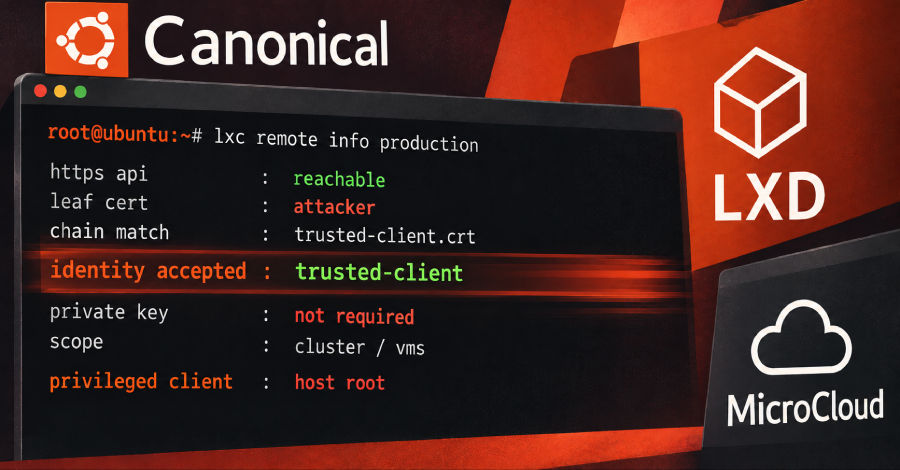
Canonical's LXD container management system and MicroCloud infrastructure software contain a critical security vulnerability assigned a maximum CVSS rating of 10.0. The security flaw allows remote attackers to impersonate trusted clients without possessing their private cryptographic keys.
How the vulnerability works
To execute an attack, an adversary must be able to reach the targeted system's HTTPS API over a network and obtain the public certificate of a trusted client. While private keys are kept secret, public certificates are often routinely shared or visible in technical environments.
By exploiting this flaw in the authentication process, the server treats the attacker as the legitimate client without requiring proof of private key ownership.
System impact
Once the impersonation succeeds, the attacker receives the full access rights of the targeted account. This provides control over the LXD or MicroCloud cluster, allowing the attacker to access, manipulate, or compromise virtual machines and container workloads.
Organizations running exposed instances of LXD or MicroCloud are at severe risk if their administrative HTTPS API endpoints are accessible over public or untrusted networks. Systems should be secured by restricting API access while updates are applied.


