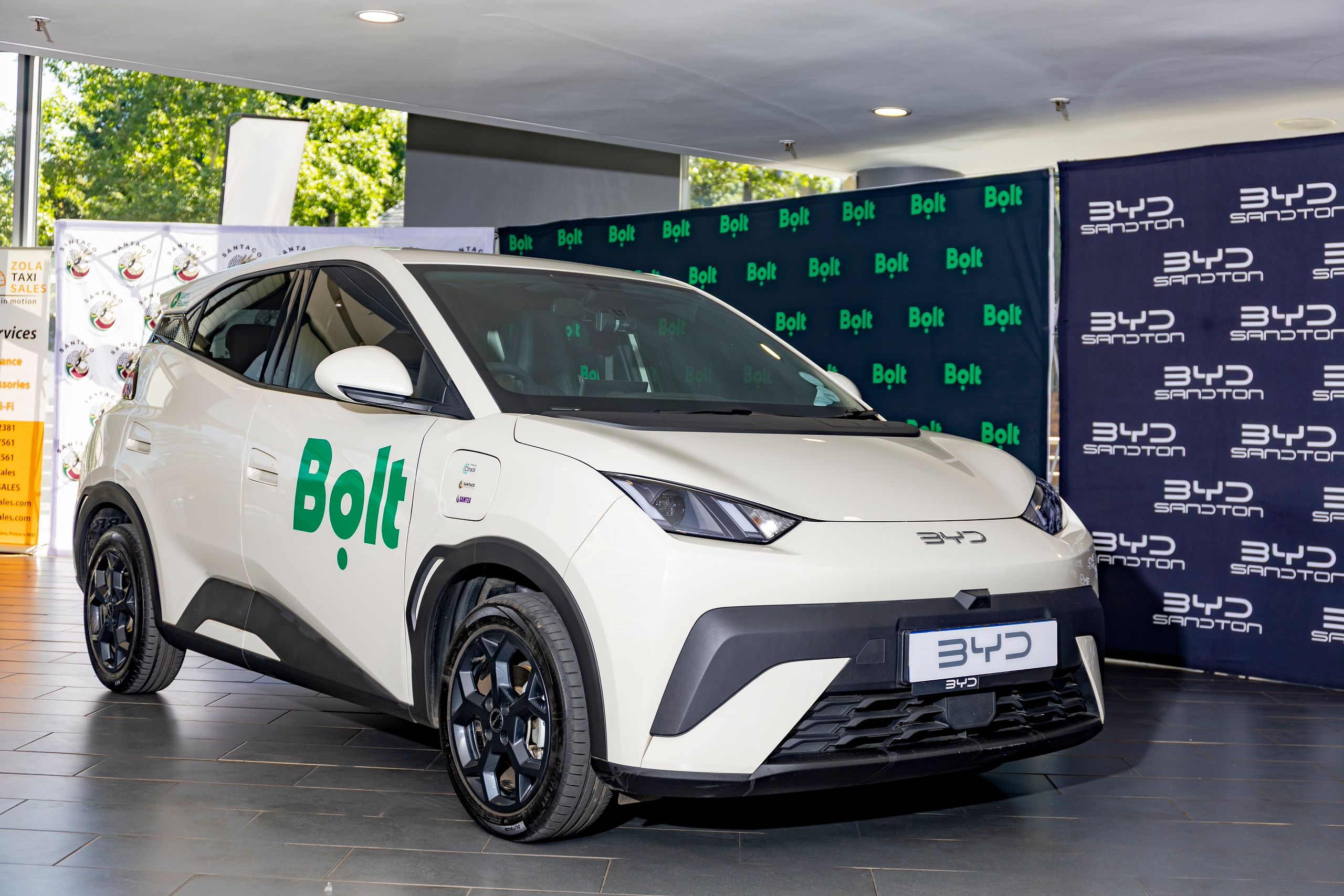
What Happened
Bolt has launched its electric vehicle (EV) ride-hailing category in Johannesburg, South Africa, through a partnership with BYD, the Chinese electric vehicle manufacturer, and the South African Meter Taxi and E-Hailing Association (SAMTEA), an affiliate of the South African National Taxi Council (SANTACO). The expansion extends Bolt's existing EV operations and sets a target of 500 electric vehicles deployed across South Africa.
The Key Details
- Partners: Bolt (European mobility platform), BYD (EV manufacturer), SAMTEA (industry association affiliated with SANTACO)
- Launch location: Johannesburg, South Africa
- Target: 500 EVs in South Africa
- Context: Builds on Bolt's pre-existing EV category in other markets
- Significance: First major structured EV ride-hailing push in Johannesburg with OEM and taxi-association backing
Why It Matters
This partnership represents a three-way alignment between a global ride-hailing platform, a leading EV manufacturer, and the organized taxi industry in South Africa. SAMTEA's involvement — as an affiliate of SANTACO, the country's dominant taxi council — signals buy-in from the traditional minibus taxi sector, which has historically been wary of ride-hailing disruption. BYD supplies the vehicles; Bolt provides the platform and demand; SAMTEA brings driver networks and regulatory legitimacy.
For South Africa, where transport emissions are a growing concern and fuel costs remain volatile, a shift to electric ride-hailing could reduce operating costs for drivers while cutting urban emissions. The 500-vehicle target, while modest relative to the total fleet, establishes a proof-of-concept that could accelerate broader EV adoption if economics prove favorable.
What It Means for Readers
For riders in Johannesburg: A new "EV category" option in the Bolt app, likely at competitive pricing given lower per-kilometer energy costs versus petrol.
For drivers: Access to BYD vehicles through partnership structures that may include financing or lease-to-own arrangements — details not yet disclosed but critical to adoption.
For the African tech ecosystem: A template for how global platforms, Chinese OEMs, and local transport institutions can collaborate on electrification. Other African cities with ride-hailing density — Lagos, Nairobi, Cairo — will watch Johannesburg's uptake closely.
For policymakers: A live case study in public-private EV transition without direct state subsidy, driven instead by platform economics and industry coordination.
What Happens Next
Bolt has not published a timeline for reaching the 500-vehicle target. Key questions remain:
- Vehicle financing models for driver-partners
- Charging infrastructure rollout in Johannesburg
- Pricing structure for the EV category versus standard Bolt rides
- Expansion plans beyond Johannesburg to Cape Town, Durban, Pretoria
- Whether other ride-hailing platforms (Uber, inDrive) will follow with similar OEM partnerships
VANTIX Takeaway
Johannesburg's EV ride-hailing launch is the most structured attempt yet to electrify on-demand transport in South Africa. Its success hinges less on the 500-vehicle number and more on whether the unit economics work for drivers — the same question facing EV adoption across the continent. If Bolt, BYD, and SAMTEA crack that equation, the model becomes exportable to every major African city where ride-hailing operates.


