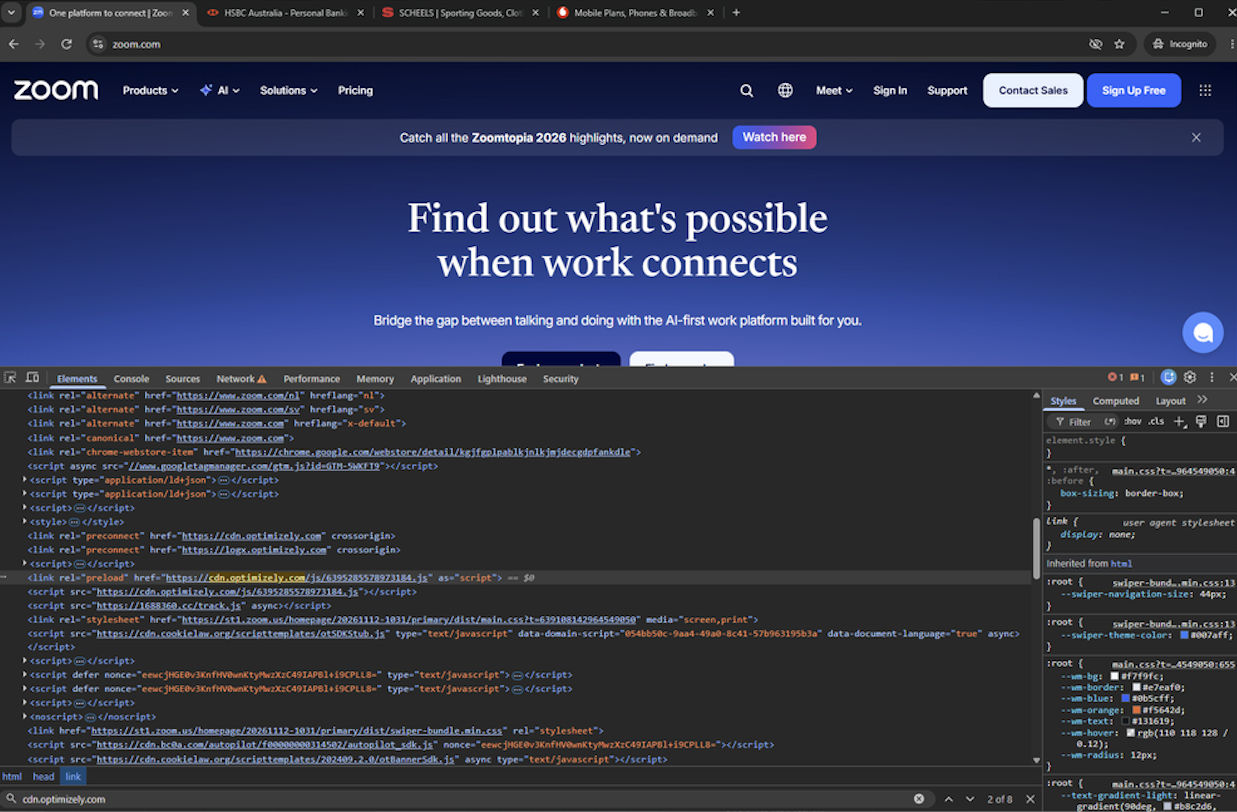
Attackers used a security vulnerability involving Optimizely to serve data-stealing malware on at least 178 top web destinations over a 24-hour period, according to Krebs on Security. The report names BBC, CNN, Equifax, Ledger and Zoom among the affected sites.
What happened
The malicious software was silently injected into the websites, according to the report. That means visitors may not have received a clear warning that something was wrong. The incident involved Optimizely, a company that helps websites customise user experiences and test new features.
Optimizely's normal role is to let publishers run experiments, such as showing one version of a page to some visitors and another version to others. The report says attackers used this capability to A/B test malware, serving a variety of malicious exploits to visitors.
Why third-party content matters
The incident highlights a common weakness on the web: many popular websites allow outside providers to load code into their pages. These third-party tools can support personalisation, testing, advertising or analytics. When one of those providers is abused or compromised, the problem can affect many sites at once.
The report says the incident was made worse by the fact that few popular websites enforce strict rules on the sources of third-party content. That makes it harder to block unexpected or malicious code before it reaches visitors.
What remains unclear
The report does not identify the exact Optimizely vulnerability, the malware families used, or how the attackers gained access. It also does not say whether any visitor data was stolen, whether the sites have removed the malicious code, or whether African websites or users were affected.
VANTIX Takeaway
The episode shows that website security is not limited to the main domain a user sees. It also depends on the external services and scripts that a site chooses to load. The key point is that a trusted brand can still be exposed when a third-party component is misused.


