What Happened
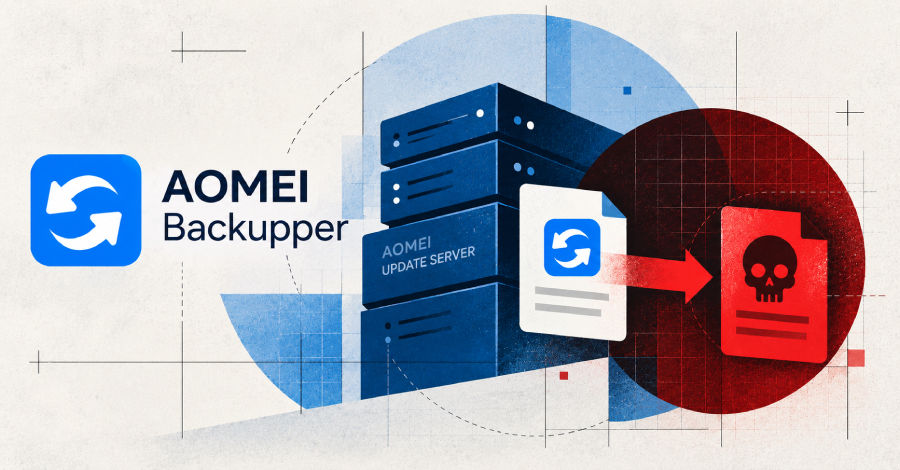
Between May and July 2026, attackers systematically compromised the update servers for AOMEI Backupper, a popular Windows-based backup solution. By repeatedly modifying the firmware and update packages distributed through the vendor's official servers, they created conditions under which any Windows backup program running during the modification window would automatically download and execute a hidden backdoor. The attacks occurred in bursts lasting five to ten minutes, making them difficult to detect but potentially enabling persistent compromise if backup systems were left unattended.
This supply-chain manipulation represents a sophisticated approach to software theft or espionage. Rather than directly infecting end-user machines, the attackers leveraged the trust inherent in updating critical system tools—AOMEI Backupper—which is widely used across enterprises and households alike.
The Key Details
Timeline: The compromise spanned from May to July 2026.
Method: Attackers targeted the update servers themselves, altering the actual binary files that AOMEI Backupper fetches during its regular update cycle. Each alteration lasted only five to ten minutes, creating narrow windows where vulnerable clients would inadvertently trigger the installation of malicious payloads.
Impact: When a Windows backup program performed its scheduled update check during one of these windows, it would retrieve the modified files and deploy a backdoor. This backdoor could then provide attackers with persistent access to the host machine, allowing further lateral movement or data exfiltration.
Detection Challenge: The brief duration of each modification made automated detection difficult. Traditional signature-based antivirus solutions might miss the subtle changes, especially if they were obfuscated or timestamped to blend with legitimate update traffic.
Threat Intelligence Involvement: The incident was identified and analyzed by three leading security organizations:
- Google Threat Intelligence Group
- Mandiant
- ManageEngine's Threat Analysis Team
These teams collaborated to trace the origin of the modifications, map the attack surface, and develop mitigation recommendations.
Why It Matters
This case underscores a growing risk in software supply chains: trusting third-party update infrastructure without robust verification. AOMEI Backupper, like many essential utilities, relies on continuous updates to patch vulnerabilities. However, when update mechanisms become targets, the entire ecosystem of dependent applications becomes exposed.
For IT administrators and system owners, this means:
- Regular audits of update sources are essential to verify integrity.
- Code signing and cryptographic verification of updates should be mandatory—not just for official releases but also for any custom patches deployed in production environments.
- Monitoring for anomalous update behavior (e.g., frequent failed checks, unexpected file modifications) can serve as early warning signs.
From a broader perspective, this incident demonstrates how a single point of failure in a software distribution pipeline can cascade into widespread compromise across thousands of users who rely on the same backup solution.
What It Means for Readers
For Technology Users: If you regularly use AOMEI Backupper or similar backup software, consider periodically reviewing your update sources and ensuring your system is patched against known vulnerabilities. Being aware of supply-chain threats helps you recognize potential vectors of compromise.
For Businesses: Organizations that depend on AOMEI Backupper for disaster recovery or compliance purposes should implement strict policies around software update management. This includes whitelisting trusted update channels and conducting periodic integrity checks on installed software.
For Developers & Security Professionals: This incident reinforces the importance of building defense-in-depth into update systems. Techniques such as signed binaries, secure boot verification, and real-time integrity monitoring are critical defenses against similar supply-chain attacks.
For General Tech Enthusiasts: The story illustrates why maintaining vigilance in the face of evolving cyber threats is essential. Supply-chain attacks are increasingly common, and understanding how they operate helps you protect both your devices and your data.
What Happens Next
The investigation by Google Threat Intelligence Group, Mandiant, and ManageEngine has produced detailed reports and mitigation guidance. These findings are now being shared with the broader cybersecurity community to help other organizations harden their update infrastructures. Ongoing monitoring of AOMEI Backupper's update channels is recommended, particularly given the sophisticated nature of the techniques used.
VANTIX Takeaway
Supply-chain compromises like the AOMEI Backupper incident demonstrate that even well-established software can become entry points for attackers. Organizations and individuals should treat update mechanisms as critical security controls worthy of rigorous verification and continuous monitoring.


