# What Happened
Nikon, the optics manufacturer best known for its cameras and microscopes, runs the Small World in Motion competition, a video counterpart to its long‑standing Small World photomicrography contest. The contest invites scientists and hobbyists to submit short films that reveal the hidden world visible through a light microscope.
In the 2025 edition, Chinese researcher Ning Xu of Tsinghua University was announced as the winner for a video that captured cilia beating in the airways of a child with a rare respiratory disorder. Shortly after the announcement, reports emerged that Xu’s footage contained structural abnormalities and AI‑like watermarks, leading Nikon to launch an investigation.
The inquiry concluded that Xu’s entry did not comply with the competition’s regulations, which prohibit the use of AI to generate or substantially modify the experimental movie. While Xu said he employed AI only to help distinguish and visualize features in grayscale images, he denied using AI to create the cilia or their motion. Nikon determined the video failed the authenticity criteria and therefore disqualified it.
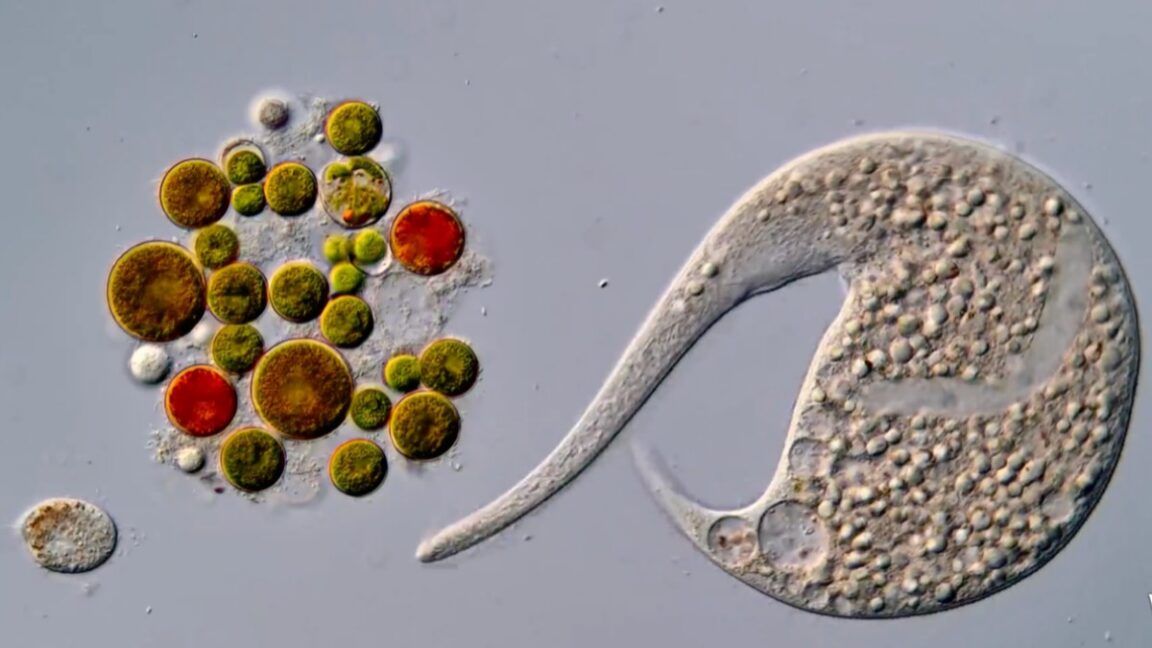
As a result, the competition has named Nguyen Nam Nhat of Vietnam as the new winner. His submission features a tiny roundworm and a single‑celled organism, Dileptus, shown in vivid detail through microscopic video.
# The Key Details
- Competition background: The Small World in Motion contest, launched as a spinoff of Nikon’s Small World photomicrography competition (established in 1974), showcases the beauty and complexity of specimens viewed under a light microscope through video or time‑lapse imaging.
- Disqualified winner: Ning Xu (Tsinghua University, China) – his video of ciliary motion in a child’s airway was removed after an AI usage investigation.
- Allegations: Researchers raised concerns that the video displayed cell features appearing and disappearing in ways inconsistent with natural biology, and that embedded AI watermarks were visible in the source files.
- AI use claim: Xu said he used AI “to distinguish and visualize features in the reconstructed grayscale images,” but denied using AI “to generate the experimental movie, the cilia, or their motion.”
- Investigation outcome: Nikon concluded the entry violated competition rules and disqualified it.
- New winner: Nguyen Nam Nhat (Vietnam) – his video of a roundworm and Dileptus earned the top prize.
- Other placings: Benedikt Pleyer (Germany) placed second with jellyfish larvae in water droplets; Andrew Moore (USA, Howard Hughes Medical Institute) placed third with synchronized cell division; Patrick Hickey (Scotland, Hypha Research Ltd.) placed fourth with mitochondrial and chloroplast dynamics in Turtle Vine leaf cells; Igor Adameyko placed fifth with a colorful sea slug (Cyerce kikutarobabai).
- Competition purpose: Both Nikon contests aim to highlight the aesthetic and scientific value of microscopic imagery, leveraging modern tools that enable moving images beyond static photographs.
# Why It Matters
The disqualification underscores growing concerns about the role of artificial intelligence in scientific imaging. As AI tools become more capable of enhancing or even generating microscopic visuals, the line between legitimate image processing and rule‑breaking manipulation can blur. Nikon’s swift action signals a commitment to preserving the integrity of its competitions, which are regarded as benchmarks for genuine scientific observation.
For researchers, the episode serves as a reminder that the methods used to prepare and present microscopic data must be transparent. For educators and students, it highlights the importance of adhering to ethical standards when using digital tools in scientific communication. For technology enthusiasts, the case illustrates how AI is reshaping fields traditionally reliant on manual observation, prompting institutions to update their policies accordingly.
# What It Means for Readers
- Everyday technology users: While the competition is niche, it reflects broader trends where AI influences the media we consume, including medical imaging and scientific visualizations that can affect health decisions.
- Smartphone buyers: The rise of AI‑enhanced photography in smartphones parallels the AI discussions in microscopy, showing how AI is becoming a standard feature in consumer imaging.
- Businesses: Companies that produce scientific equipment or software may need to develop clearer guidelines and verification tools to assure customers of product authenticity.
- Developers: The incident may drive the creation of AI‑audit utilities for image and video pipelines, an emerging area for software engineers focused on scientific data integrity.
- Creators and artists: The case demonstrates the need for transparent workflow documentation when using AI tools in visual projects, a lesson applicable beyond scientific contexts.
- Students and technology enthusiasts: Understanding the rules and ethical considerations of AI‑assisted research prepares future scientists and engineers for responsible innovation.
- African users or markets: No direct impact is evident; the story is global in scope, and any regional relevance would depend on local adoption of AI‑enhanced microscopy tools.
# What Happens Next
Nikon has not announced specific rule changes yet, but the investigation suggests the organization may tighten criteria around AI usage in future editions. Participants are likely to provide more detailed documentation of their image‑processing pipelines to avoid similar disputes.
# VANTIX Takeaway
The disqualification of a winner for alleged AI use highlights the need for transparency in scientific imaging and shows how AI is reshaping microscopy. Nguyen Nam Nhat’s win reminds us that genuine, unaltered microscopic observation remains a valued and respected form of discovery.


