What Happened
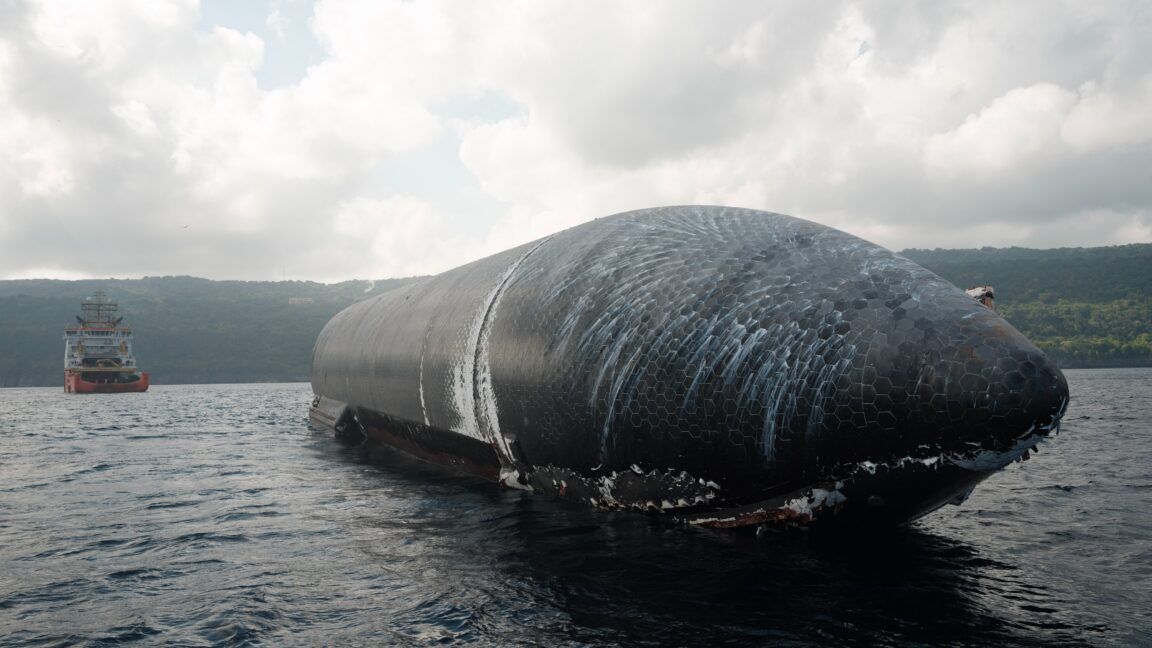
SpaceX has achieved an unexpected milestone in its Starship development program. Following its latest test flight on July 24, the massive Starship spacecraft splashed down in the Indian Ocean and, contrary to engineering expectations, remained entirely intact after tipping over. After spending 24 days at sea, a recovery vessel successfully towed the 170-foot spacecraft to Christmas Island, an Australian territory.
The Key Details
During previous test flights, Starship vehicles typically suffered fiery disintegrations after toppling over post-splashdown. This time, the vehicle survived the landing sequence intact.
Key facts of the recovery operation include:
- The Journey: The spacecraft was towed engine-first for several hundred miles across the Indian Ocean.
- Dimensions: Starship measures over 170 feet (52 meters) in length and 30 feet (9 meters) in diameter.
- Logistics: Because of its immense size, the spacecraft cannot fit into any existing cargo aircraft. Any return journey to SpaceX's "Starbase" development facility in South Texas—located more than 10,000 miles away—will have to occur by sea.
SpaceX confirmed that a team of engineers is traveling to Christmas Island to conduct initial physical analyses of the vehicle in calmer waters.
Why It Matters
While SpaceX has collected vast amounts of digital telemetry and sensor data from its 13 Starship and Super Heavy booster test flights, physical hardware inspection is invaluable. The company has mastered the recovery and reuse of its smaller Falcon 9 boosters, but Starship represents a much larger, fully reusable architecture. Being able to physically examine the heat shield and structural components after they have endured the extreme heat of atmospheric reentry will provide engineers with insights that sensors alone cannot capture.
What Happens Next
Engineers will first analyze the spacecraft off the coast of Christmas Island. Once these initial assessments are complete, SpaceX must figure out the logistics of transporting the giant vehicle 10,000 miles back to South Texas.
VANTIX Takeaway
The unexpected survival and successful recovery of this Starship vehicle transitions SpaceX's testing phase from relying purely on digital telemetry to hands-on hardware forensics, bringing the company a step closer to its goal of a fully reusable deep-space transport system.


